Utility Stocks vs Treasuries: The Bond Proxy Problem
Surmount Blogs
Utility stocks vs treasuries: why rising yields pressure utilities, and how systematic investors track it
Utility Stocks vs Treasuries: The Bond Proxy Problem
Data centers are consuming more electricity than ever, and the grid is racing to keep up. By the logic of most headlines, utility stocks should be having a banner year. Instead, the sector has stumbled.
After surging more than 11% through February, S&P 500 utilities were roughly flat year-to-date by early September, the second-weakest of the 11 main sectors (Bloomberg).
By late September, the 10-year Treasury yield climbed to 5.135%, its highest level since July 2007, and utilities led the market's declines (CNBC).
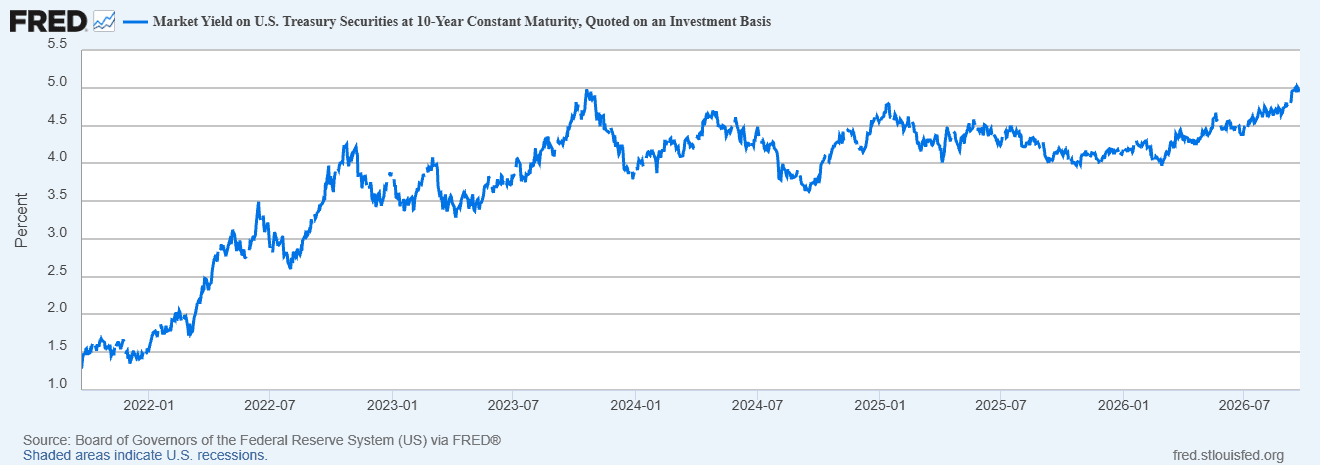
The disconnect makes sense once you look at utility stocks vs treasuries side by side. For income-focused investors, the two compete for the same dollars, one of the defining tensions of a high-interest-rate world.
Why AI Power Demand Hasn't Lifted Utility Stocks
The AI power demand story is real. One report estimates that data centers used about 5% of U.S. electricity in 2025 and could grow substantially in the coming years.
The problem is timing:
Costs come first. Investor-owned electric companies spent a record $178.2 billion in 2024 and are projected to spend more than $1.1 trillion from 2025 to 2029 (Edison Electric Institute).
Revenue comes later. It typically arrives once new assets are approved into customer rates.
Borrowing costs bite in between. Higher rates could add billions of dollars to the cost of building AI infrastructure (NBC News).
In short, the market is weighing today's financing costs against load growth that may take years to show up in earnings, a timing gap that mirrors how markets price Big Tech's own capex cycle.
Utilities as Bond Proxies: How the Mechanism Works
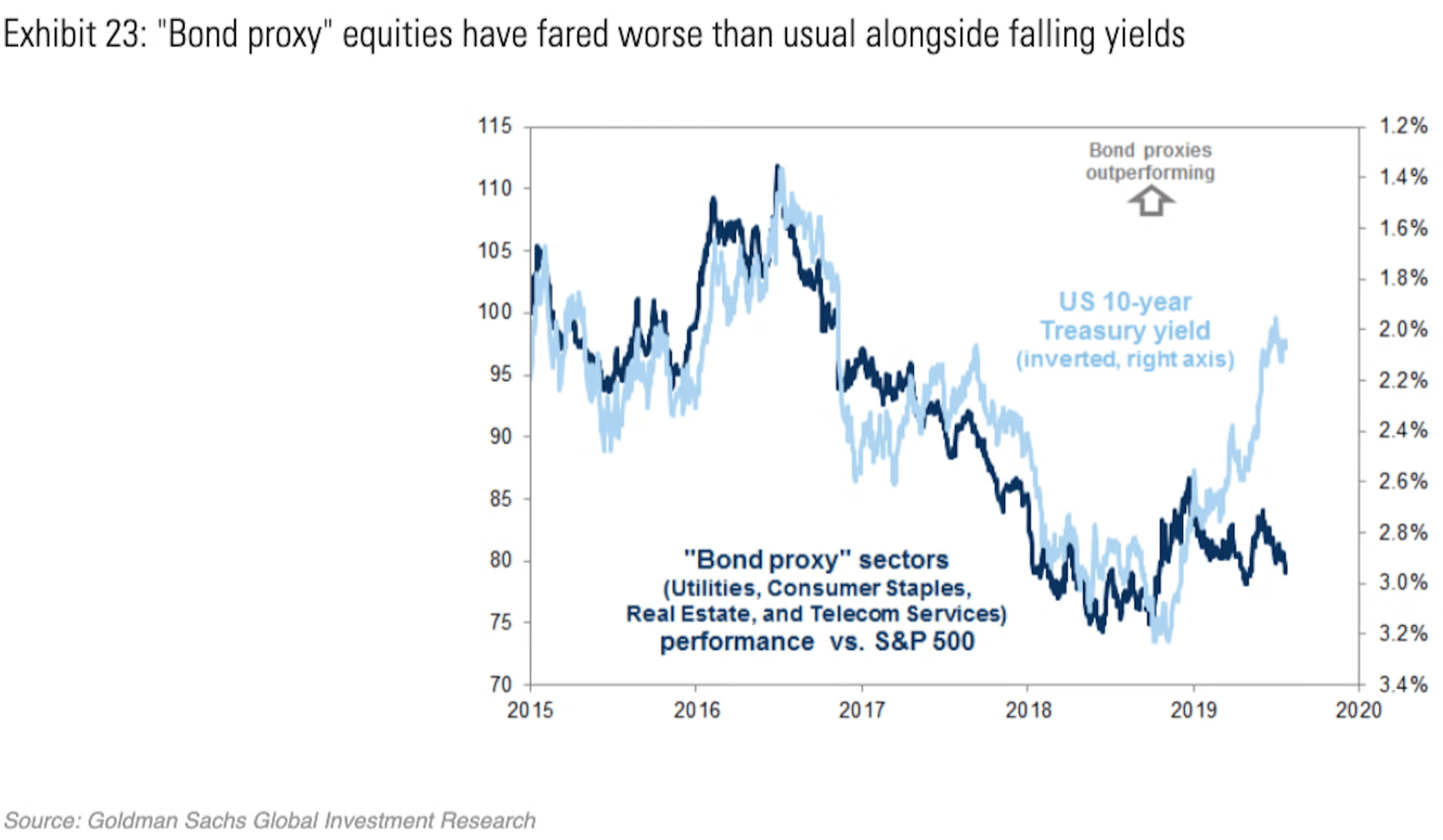
Regulated utilities earn steady, predictable cash flows, and many shareholders own them mainly for the dividend rather than for growth. That is why analysts often describe utilities as bond proxies: their prices tend to move with yields, much like fixed income.
Dividend Yield vs Treasury Yield: The Parity Math
When comparing dividend yield vs treasury yield, the core question is simple: is the extra income enough to compensate for equity risk?
Consider a hypothetical example (for illustration only, not a real security):
A utility pays a 3.5% dividend yield.
A 10-year Treasury yields 5%.
The Treasury offers more income with less price and credit risk.
That is a sharp reversal from past cycles. In 2014, the S&P 500 utility sector's 3.9% dividend yield sat more than 100 basis points above the 10-year Treasury yield..
Why Parity Usually Comes Through Price, Not Payouts
When utility income looks thin against Treasuries, something has to adjust, and it is rarely the dividend.
Regulated utilities generally can't raise customer rates without regulatory approval.
Dividend increases tend to be gradual, which is why a dividend safety checklist weighs sustainability over headline yield.
So the share price often does the adjusting, because a lower price mechanically lifts the dividend yield.
This is the heart of the utility stocks vs treasuries tension.
The Squeeze on Allowed Returns
Regulators set the allowed return on equity a utility can earn, and those allowed returns have not kept pace with rates.
The average authorized ROE for electric utilities was 9.68% in the first half of 2025, slightly below the full-year 2024 average of 9.74% (S&P Global Market Intelligence).
In Pennsylvania, a proposed bill would cap utility ROEs at the 10-year Treasury yield plus two percentage points (Alliance for Innovation and Infrastructure).
With 10-year yields above 5%, the gap between allowed returns and risk-free rates is unusually narrow.
Utility Stocks vs Treasuries: What the Yield Spread Reveals
The cleanest way to frame utility stocks vs treasuries is as a single number: the sector's dividend yield minus the 10-year Treasury yield. A wide, positive gap has historically made utility income look more competitive. A narrow or negative gap shows that bonds are offering more income on paper.
Tracking the Yield Spread Systematically
Because the yield spread is a number rather than a narrative, it lends itself to rules-based monitoring:
Define the inputs, such as sector dividend yield and the 10-year yield.
Set thresholds in advance.
Review changes on a fixed schedule rather than in reaction to headlines.
This doesn't predict outcomes, but it does remove some of the emotion from interpreting them, the same systematic discipline that shapes selling decisions.
Beyond Utilities: Other Rate Sensitive Stocks
The same logic applies to other rate sensitive stocks, including:
Real estate investment trusts (REITs)
Telecom companies
High-payout consumer staples
Real estate was also among the notable decliners when yields jumped in late September (NBC News). Holding several of these at once can quietly concentrate rate exposure, a risk covered in our look at diversification in uncertain markets.
A Sector Rotation Strategy Lens on Rate Cycles
A sector rotation strategy uses predefined rules to shift exposure between sectors as conditions change. In rate cycles, those rules might reference Treasury yields, income gaps between asset classes, or price trends. Our breakdown of the sector rotation ETF approach covers the mechanics in more depth.
The appeal for systematic investors is consistency: the same inputs trigger the same response, regardless of the headlines. Like any approach, rotation carries risk, including losses and whipsaws when rates reverse quickly, which makes it worth knowing the red flags and green flags of any trading strategy.
Key Takeaways
Utilities often trade like bonds, so rising Treasury yields tend to pressure their prices.
AI power demand is real, but heavy spending arrives well before the revenue.
Allowed returns are lagging higher rates, compressing utility economics.
Framing utility stocks vs treasuries as a defined spread turns a noisy debate into a measurable one.
AlphaFactory Income: A Rules-Based Take on the Income Trade-Off
This whole article comes down to one recurring question. When Treasuries pay more than dividend stocks, how should income exposure respond? Answering it by gut feel every time yields jump is exhausting, and it's easy to get wrong. AlphaFactory Income was built to handle that exact question with predefined rules instead of headlines.
What the strategy does
Holds both sides of the debate. It allocates across Treasury and bond ETFs, from short-term T-bill funds to long-duration Treasuries, alongside dividend-focused equity ETFs. It doesn't pick one side of the utility stocks vs treasuries argument and hope; its rules weigh both.
Reads the same signals this article covers. Allocations adjust using momentum signals and inflation data, the forces that drove this year's shift in the income landscape.
Takes the emotion out. The rules run on schedule whether markets are calm or chaotic, so no decision hinges on the latest headline.
Adds a currency lever. A U.S. dollar ETF gives the rules another tool when macro conditions change.
Works with your existing account. Surmount connects to your current brokerage, and the strategy's description and holdings universe can be reviewed on the platform before any decision is made.
Risks to weigh
Bond ETFs can lose value when rates rise, and long-duration funds are especially sensitive.
Dividend ETFs carry stock market risk, and dividends can be reduced or cut.
Momentum and inflation signals can lag or reverse, which can lead to whipsaws and losses.
A rules-based approach is not risk-free. No strategy guarantees income or protects against loss.
[ Explore How AlphaFactory Income Works → ]
Surmount builds investment products with the objective to help investors approach markets smarter and with less hassle. Surmount does not provide financial advice and does not issue recommendations or offers to buy or sell any security. All investments involve risk, including loss of principal.
Frequently Asked Questions
What does it mean to describe utilities as bond proxies?
The term refers to how many shareholders own utilities mainly for steady dividends. That makes their prices tend to move with bond yields rather than with growth expectations.
Why do utility stocks fall when Treasury yields rise?
Higher Treasury yields offer competing income with less risk. Utility share prices often fall until their dividend yields look competitive again.
How can you compare utility stocks vs treasuries?
A common approach sets the utility sector's dividend yield against the 10-year Treasury yield. The gap shows how much extra income comes with taking on equity risk.
Who uses a sector rotation strategy?
Systematic investors often use this approach to shift exposure between sectors using predefined rules. It reduces reliance on forecasts but carries whipsaw risk when conditions reverse quickly.
Which other rate sensitive stocks behave like utilities?
REITs, telecom companies, and high-payout consumer staples are common examples. Their prices often react to changes in Treasury yields.

Automate any portfolio using data-driven strategies made by top creators & professional investors. Turn any investment idea into an automated, testable, and sharable strategy.