Education
Portfolio Diversification Strategies for Uncertain Markets
Markets don't always move together. But every so often, a single theme — a sector, a technology, a narrative — starts to dominate returns so completely that everything else seems to fade into the background. That's the environment many investors are navigating right now, a dynamic we broke down in detail in Decoding Big Tech CapEx: How to Spot Growth Before the Market Does, and it's raising a familiar question: how do you build a resilient portfolio when one trend seems to be driving everything?
The answer isn't to chase the trend or avoid it entirely. It's to revisit the fundamentals of portfolio diversification strategies — and apply them with more intention than a "set it and forget it" approach usually allows.
Why Portfolio Concentration Risk Is Rising in Today's Markets
Concentration risk isn't new, but it tends to resurface whenever a powerful narrative takes hold of the market. Historically, this has happened during major technological shifts — railroads, the internet, and now artificial intelligence — where a wave of capital floods into a narrow set of companies or sectors.
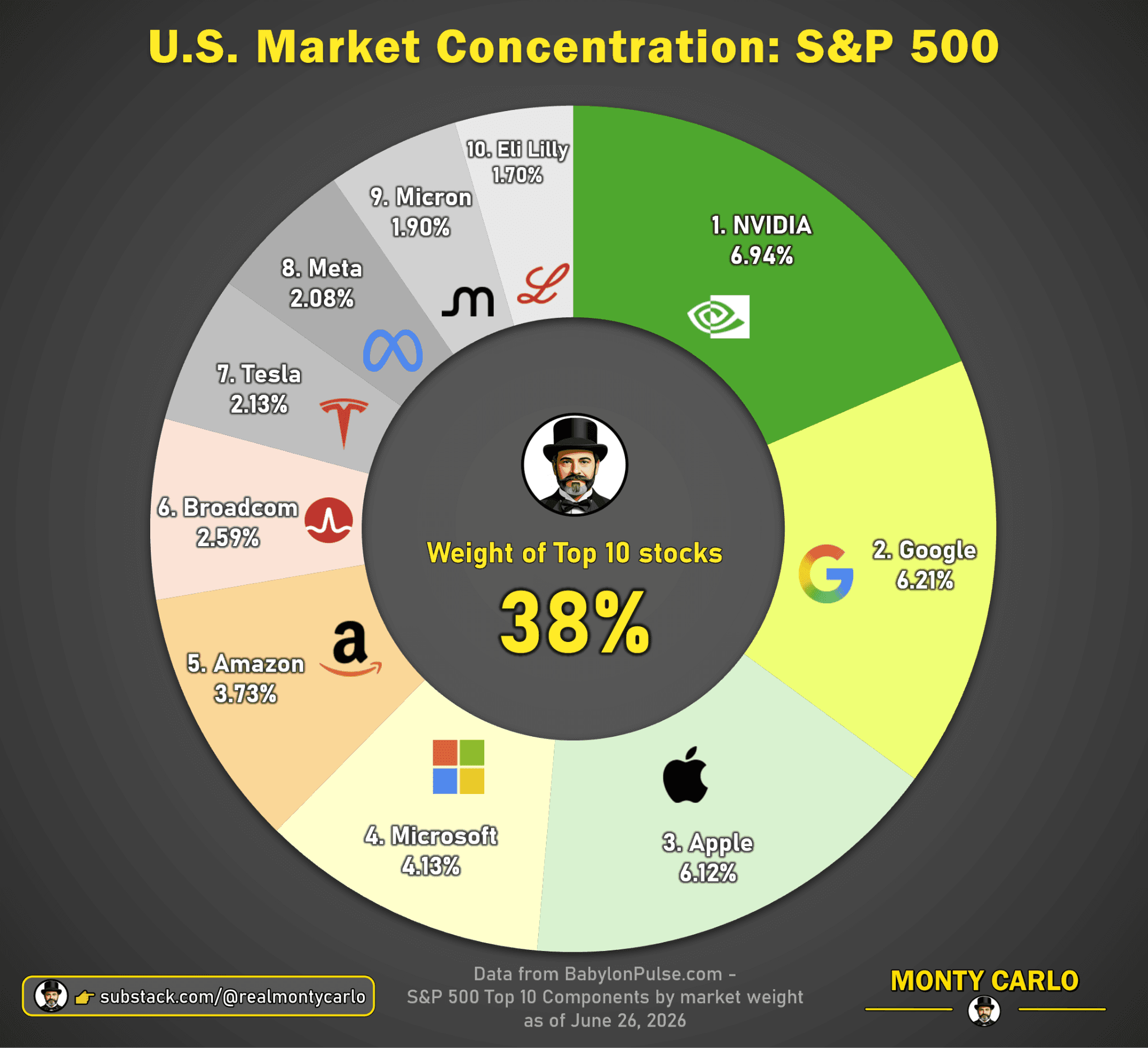
This isn't just a historical pattern — it's happening now. According to RBC Wealth Management's analysis of long-term index data, the 10 largest companies in the S&P 500 accounted for roughly 41% of the index's total weight by the end of 2025 — nearly double their share just a decade earlier. That means even investors who believe they hold a broadly diversified index fund may be carrying far more concentrated exposure than they realize.
This is exactly why portfolio diversification strategies matter more during concentrated markets, not less — a theme we explored further in The Hidden Tax on Your Portfolio: Why Concentration Risk Costs More Than You Calculate. The goal isn't to predict whether the dominant trend continues or reverses — it's to structure a portfolio so that no single outcome determines your overall results.
Core Portfolio Diversification Strategies to Know
There isn't one "correct" way to diversify. Different strategies address different types of risk, and most well-constructed portfolios combine several of them.
Sector Diversification: Don't Bet on One Trend
Sector diversification means spreading exposure across multiple industries — technology, healthcare, energy, consumer staples, financials, and others — rather than concentrating in whichever sector currently dominates headlines. Sector leadership rotates over time, a pattern we cover in more depth in The Sector Rotation ETF Strategy: How to Move With the Market Cycle. Morningstar's decade-long review of US sector performance found that sector leadership is highly changeable year to year, underscoring the value of staying diversified across sectors rather than concentrated in the current leader.
Some practical ways investors think about sector diversification:
Reviewing sector weightings periodically rather than relying on how a portfolio was originally allocated
Considering sectors that are currently underweighted relative to broad benchmarks
Distinguishing between direct exposure (companies at the center of a trend) and indirect exposure (companies that may benefit downstream)
Asset Allocation Strategies Across Equities, Crypto & Forex
Asset allocation strategies go a layer beyond sectors — they address how capital is spread across entirely different asset classes. Equities, fixed income, commodities, currencies, and digital assets each respond differently to economic conditions, interest rate changes, and market sentiment. Vanguard's research on building resilient portfolios notes that market leadership isn't guaranteed to persist, and that chasing whatever is currently outperforming can leave investors exposed to unnecessary volatility.
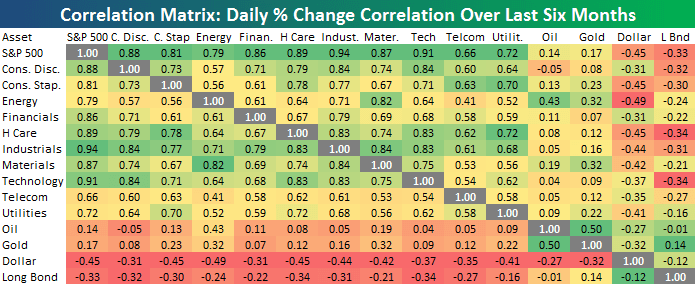
To diversify across asset classes is to accept that no single asset class outperforms in every environment. This kind of low or shifting correlation is often the point — a topic we explore in Bitcoin's Role in Modern Portfolios, where digital assets are examined as a potential diversifier alongside traditional holdings.
Rebalancing Your Portfolio to Stay Diversified
Diversification isn't a one-time decision — it erodes naturally over time. If one holding or sector significantly outperforms the rest, it can grow to represent a much larger share of the portfolio than originally intended, quietly increasing concentration risk. Rebalancing your portfolio means periodically adjusting positions back toward target allocations, a process we break down further in AI-Powered Portfolio Rebalancing: Start 2026 With Optimized Allocation.
Trimming positions that have grown disproportionately large
Adding to underweighted areas to restore balance
Reviewing allocations on a consistent schedule (monthly, quarterly, or based on defined thresholds) rather than reactively
It's worth noting that diversification and rebalancing don't eliminate risk or guarantee outcomes — no portfolio strategy can. Markets can decline broadly, and even well-diversified portfolios can experience losses. The goal is managing exposure to any single risk factor, not avoiding risk altogether.
Why a Systematic Investing Strategy Makes Diversification Easier
Manually tracking sector weightings, asset allocations, and rebalancing schedules across multiple accounts and asset classes is time-consuming — and easy to neglect during volatile markets, which is often when it matters most.
This is where a systematic investing strategy can help. Rather than relying on manual monitoring and periodic guesswork, a rules-based approach applies consistent logic to allocation and rebalancing decisions, removing some of the emotional and behavioral factors that can derail diversification during periods of market stress. The scale of this behavioral gap is well documented: DALBAR's 2024 Quantitative Analysis of Investor Behavior report found the average equity fund investor earned 16.54% in 2024 versus the S&P 500's 25.02% — an 848 basis point gap driven largely by mistimed decisions rather than the investments themselves.
Systematic strategies aren't a guarantee against loss, and past patterns don't ensure future results. But for investors who understand why diversification matters, automating the mechanics of maintaining it can make the difference between a strategy that exists on paper and one that's actually followed through market cycles.
Explore How Signal 47 Handles This Exact Dynamic
Everything this article has walked through — sector concentration creeping into “diversified” portfolios, single narratives dominating index returns, the discipline required to rebalance before drift becomes risk — is the exact problem the Signal 47 Multi-Factor ETF (S47M) attempts to address.
Where a market-cap-weighted index lets its largest, most-hyped names grow into an ever-bigger share of your exposure, Signal 47 takes a structurally different approach:
Equal-weighted across 25 large-cap leaders — spanning technology, healthcare, financials, consumer staples, energy, and industrials, so no single sector or trend can quietly dominate the portfolio
Blends four complementary factors — value, dividend strength, momentum, and quality — rather than concentrating in whichever style happens to be working right now
Rebalanced quarterly by rule, not by reaction — maintaining factor discipline systematically, without relying on an investor to notice drift and act on it manually
Benchmarked transparently against SPY, VTV, VYM, and MTUM — so its diversification approach can be measured against the exact concentration dynamics this article describes
In other words: if the core takeaway of this piece is “diversification requires structure, not intention,” Signal 47 is what that structure looks like in practice.
Like any equity strategy, Signal 47 is subject to market risk, and diversification does not eliminate the possibility of loss — a factor-based, multi-sector approach can still decline in value, including during broad market downturns. Explore how the strategy is constructed and see whether its approach to concentration risk fits your own portfolio.
Frequently Asked Questions
What are the best portfolio diversification strategies for volatile markets?
The most effective portfolio diversification strategies combine sector diversification, cross-asset allocation, and periodic rebalancing rather than relying on any single approach alone.
How do I reduce portfolio concentration risk?
You can reduce portfolio concentration risk by capping position sizes, spreading exposure across sectors and asset classes, and rebalancing regularly so no single holding grows disproportionately large.
Why is sector diversification important right now?
Sector diversification matters because market leadership rotates over time, and portfolios overweighted in one sector face greater risk if sentiment shifts away from that trend.
How often should I be rebalancing my portfolio?
Most systematic investing strategy approaches rebalance monthly or quarterly, or when an allocation drifts past a set threshold, rather than on a purely reactive basis.
Can a systematic investing strategy help with diversification?
Yes — a systematic investing strategy applies consistent, rules-based logic to allocation and rebalancing, which can help maintain diversification more reliably than manual monitoring alone.
Automate any portfolio using data-driven strategies made by top creators & professional investors. Turn any investment idea into an automated, testable, and sharable strategy.