Education
What Bond Market Signals Are Telling Investors Now
The bond market doesn't shout. It moves in small increments — a few basis points here, a shift in the yield curve there — but those movements often reflect what large institutional investors believe about inflation, growth, and risk before those beliefs show up anywhere else.
Bond market signals are the data points bond investors watch to gauge where the economy is heading:
Treasury yield levels and how quickly they're rising or falling
The shape of the yield curve (short-term vs. long-term rates)
Credit spreads between government and corporate debt
Demand at Treasury auctions
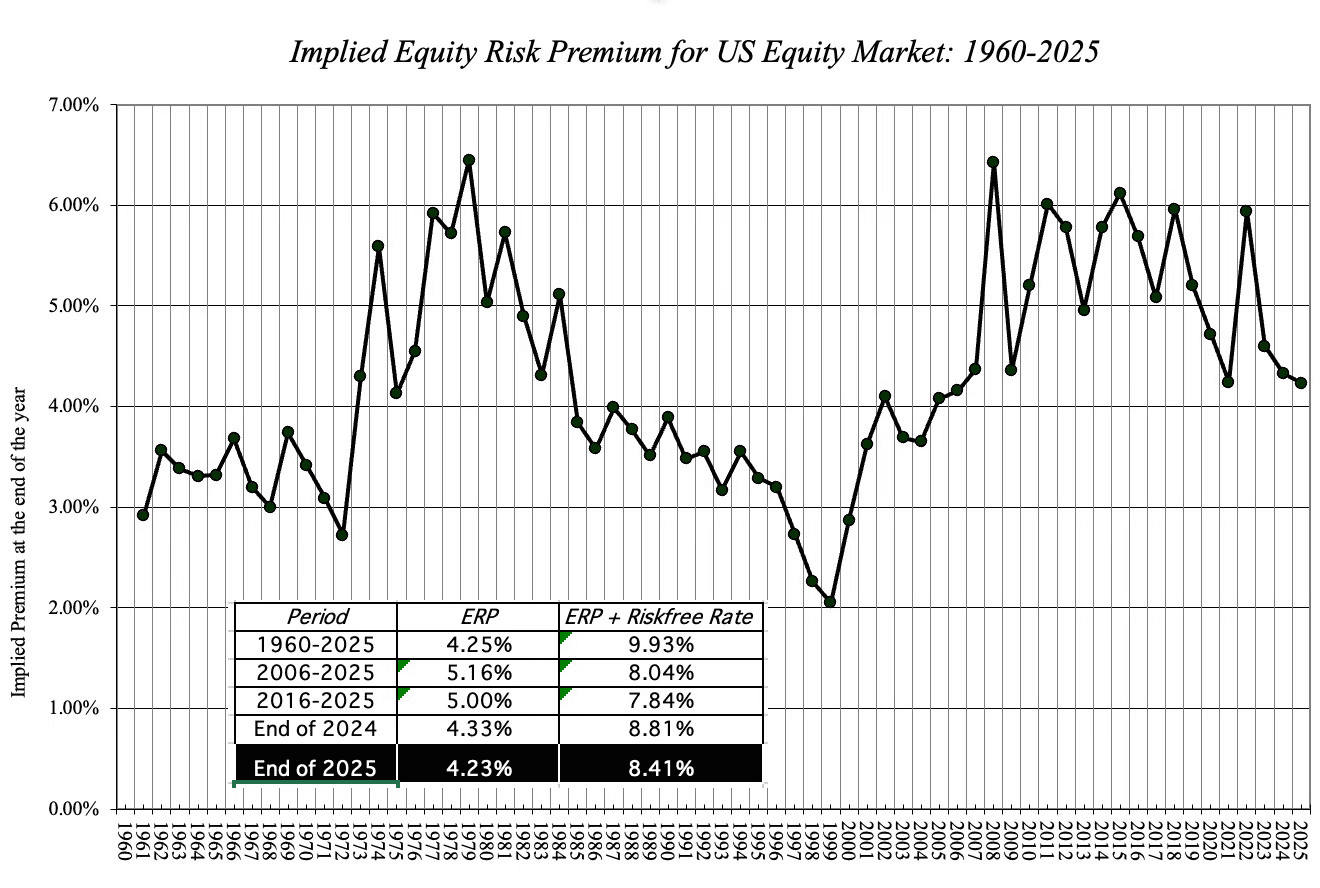
For equity investors, these signals matter because bonds and stocks compete for the same capital. When bond yields rise, they become a more attractive alternative to stocks — which can pressure equity valuations, particularly for higher-growth companies, a dynamic researchers describe through the equity risk premium — the extra return investors demand for holding stocks instead of "safer" government debt.
The Current Signal: Rising Treasury Yields and Stocks
Treasury yields and stocks have an inverse relationship, in theory: as yields climb, the "risk-free" return available to investors improves, which can make riskier equity positions less appealing by comparison.
When yields rise quickly, a few things tend to happen:
Growth stocks with high valuations often feel more pressure than value stocks, since their worth depends heavily on future earnings discounted back to today
Sectors sensitive to borrowing costs — real estate, utilities, and highly leveraged companies — can see outsized reactions
Portfolio managers may reassess allocation between equities and fixed income
That said, the relationship isn't always this clean. Markets have moved higher during periods of rising yields before, which is part of why managing a portfolio when bonds finally offer real yield again requires more nuance than a single inverse rule.
Is There Really Such a Thing as a Risk-Free Rate?
Long-term Treasury yields are often described as a "risk-free rate" — but that label deserves scrutiny. Holding a bond to maturity does lock in a stated yield. Selling before maturity is a different story entirely.
If yields rise after you buy, the market value of your existing bond falls
Long-duration bonds are more sensitive to rate changes than short-duration ones
"Risk-free" typically only applies to the return if held to maturity — not to the price along the way
This distinction matters because it's easy to see a headline yield number and assume it's a guaranteed, low-risk return. The reality is more nuanced, and conflating yield with safety can lead to decisions that don't account for interim volatility.
What a Yield Curve Inversion Has Historically Signaled
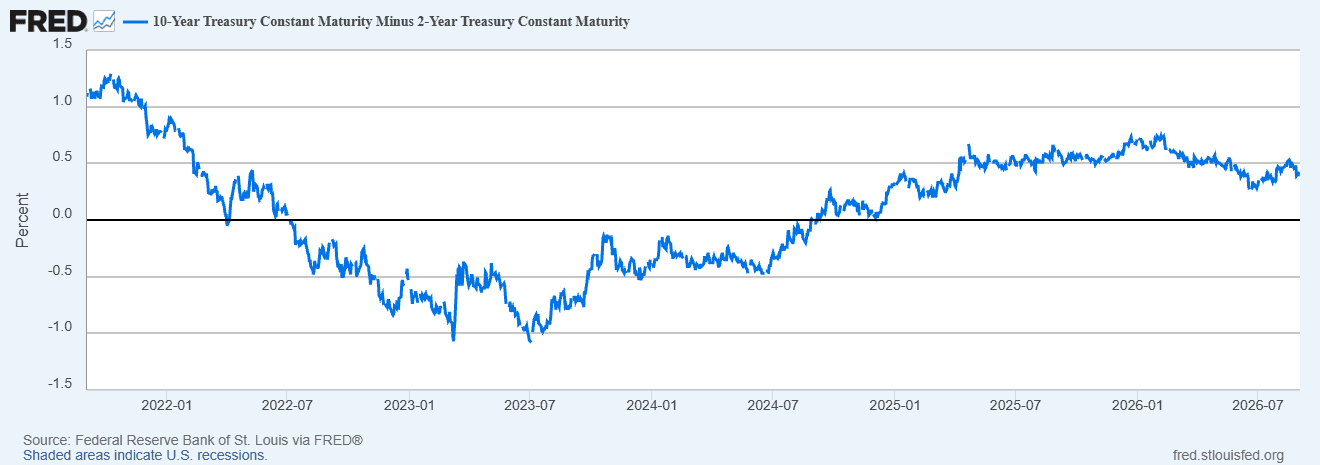
A yield curve inversion — when short-term rates exceed long-term rates — has drawn attention for decades because of its historical association with economic slowdowns. According to research from the Federal Reserve Bank of San Francisco, every U.S. recession over roughly the past 60 years was preceded by a negative term spread — with one notable exception in the mid-1960s, and a lag between inversion and recession that has historically ranged from 6 to 24 months.
It's worth noting:
An inversion is not a precise timing tool — the lag has varied significantly across cycles
At least one inversion has not been followed by an official recession
Markets often continue rising for extended periods after an inversion begins
This is a useful example of why single signals, even well-known ones, rarely tell the whole story on their own — a theme also explored in separating genuine recession risk from market noise.
Why Emotional Reactions to Rate Moves Backfire
Headlines about rising yields tend to trigger strong reactions — and reactive decisions made under pressure are where many investors run into trouble. According to DALBAR's 2025 investor behavior research, the average equity fund investor earned 17.16% in 2024 versus the S&P 500's 17.88% — a 72 basis point gap driven cumulatively by poorly timed buying and selling.
Common patterns worth recognizing:
Selling equity positions after a sharp yield move, only to face regret if markets recover — a pattern closely tied to how investors misjudge their own risk tolerance until volatility actually hits
Chasing yield into long-duration bonds without accounting for price risk if rates keep climbing
Making allocation changes based on a single data point rather than a broader signal set, instead of relying on threshold-based, systematic rebalancing triggered by predefined rules
None of this means bond market signals should be ignored — quite the opposite. It means the response to those signals benefits from structure rather than instinct.
Responding to Bond Market Signals with a Systematic Investing Strategy
This is where a systematic investing strategy offers a meaningfully different approach than reacting headline by headline. Independent research from S&P Dow Jones Indices' SPIVA Scorecard found that 79% of actively managed large-cap U.S. equity funds underperformed the S&P 500 in 2025 — a reminder that discretionary, in-the-moment decisions carry a long track record of falling short of a disciplined, rules-based approach.
Rather than asking "how do I feel about this yield move," a systematic approach — the same logic behind automated approaches to shifting interest rate environments — asks:
What rules-based criteria define a meaningful shift in the signal set, not just one data point?
How should allocation adjust in response, based on predefined logic rather than in-the-moment judgment?
How is that logic monitored over time, so it isn't just a one-off guess?
Automating the response to bond market signals doesn't eliminate uncertainty — no approach does. But it does remove a layer of emotional decision-making from a process that, as the sections above illustrate, is easy to get wrong when reacting in real time to incomplete information.
For investors trying to make sense of what the bond market is signaling — and considering how to structure a response rather than reacting headline by headline — this is exactly the kind of question systematic, automated strategies are built to help think through.
Frequently Asked Questions
How do bond market signals affect the stock market?
Bond market signals like yield changes affect stocks by shifting the relative appeal of "risk-free" returns versus equity risk. Rising yields can pressure equity valuations, particularly for growth stocks.
What does it mean when the yield curve inverts?
A yield curve inversion happens when short-term Treasury yields exceed long-term yields. It has historically preceded most U.S. recessions since 1955, though the timing and outcomes vary.
Is the 10-year Treasury yield really a risk-free rate?
Only if held to maturity. Selling before then exposes investors to price fluctuations tied to rate changes, making the "risk-free" label misleading for anything but buy-and-hold to maturity.
Why do treasury yields and stocks often move in opposite directions?
Bonds and stocks compete for investor capital. When treasury yields and stocks are compared, higher yields can make bonds relatively more attractive, pulling demand — and valuations — away from equities.
How can I respond to bond market signals without emotional decision-making?
A systematic investing strategy uses predefined, rules-based logic to adjust allocations based on a broader signal set, rather than reacting to any single headline or data point.
Automate any portfolio using data-driven strategies made by top creators & professional investors. Turn any investment idea into an automated, testable, and sharable strategy.