Rethinking Fixed Income Strategy in a Rate-Volatile Market
Surmount Blogs
Rates are shifting fast. See how a fixed income strategy adapts to duration and yield curve risk

Rethinking Fixed Income Strategy in a Rate-Volatile Market
Rates no longer move in a straight line, and the way investors think about fixed income strategy is shifting with them. Recent Treasury actions aimed at managing long-end yields have made one thing clear: the mechanics behind bond pricing are growing more complicated.
The Fixed Income Landscape Is Shifting
For years, a fixed income strategy could lean on relatively stable assumptions: yields moved gradually, duration risk was predictable, and policy intervention was the exception, not the rule. That backdrop has changed.
In August 2026, the U.S. Treasury announced it would at least double the size of its liquidity support buyback operations for longer-dated securities in the 10-to-20-year and 20-to-30-year maturity sectors, raising the per-operation cap from $2 billion to at least $4 billion. Actions like this don't reduce total government debt — they change its composition, often replacing fixed long-term obligations with shorter-term debt that has to be refinanced more frequently.
This kind of shift matters for anyone holding bonds directly or through a broader fixed income strategy, because it changes the risk profile of the debt itself — not just its price today.
Understanding Duration Risk in Today's Market
Duration risk — the sensitivity of a bond's price to interest rate changes — becomes more pronounced when the maturity profile of debt shortens across the market. Shorter-duration debt must be reissued more often, which means:
More frequent exposure to prevailing rates at each refinancing point
Greater sensitivity to short-term rate volatility, rather than long-term rate stability
Compounding costs if new issuance carries a higher rate than the debt it replaces
For a deeper look at how shifting rate environments affect bond ladders and portfolio construction, see our breakdown of automated approaches to the current interest rate environment.
What Interest Rate Risk Means for Bond Portfolios
Interest rate risk isn't new, but its practical impact on bond portfolio allocation is shifting. A portfolio built assuming gradual, predictable rate movement may not account for:
Faster repricing cycles across short-duration holdings
Wider dispersion between short- and long-end yields
Policy-driven distortions that decouple yields from typical inflation or growth signals
For investors used to setting a fixed income allocation and revisiting it annually, this is a case for more frequent — and more data-driven — review. We've previously covered how Fed rate cuts affect bond math and cash yields in more granular detail.
See our earlier coverage: How Fed Rate Cuts Impact Bond Math and Cash Yields
How the Yield Curve Is Signaling Change
The yield curve has always functioned as a forward-looking signal. Right now, it's signaling that the relationship between short- and long-term rates is being actively managed rather than left to find its own level.
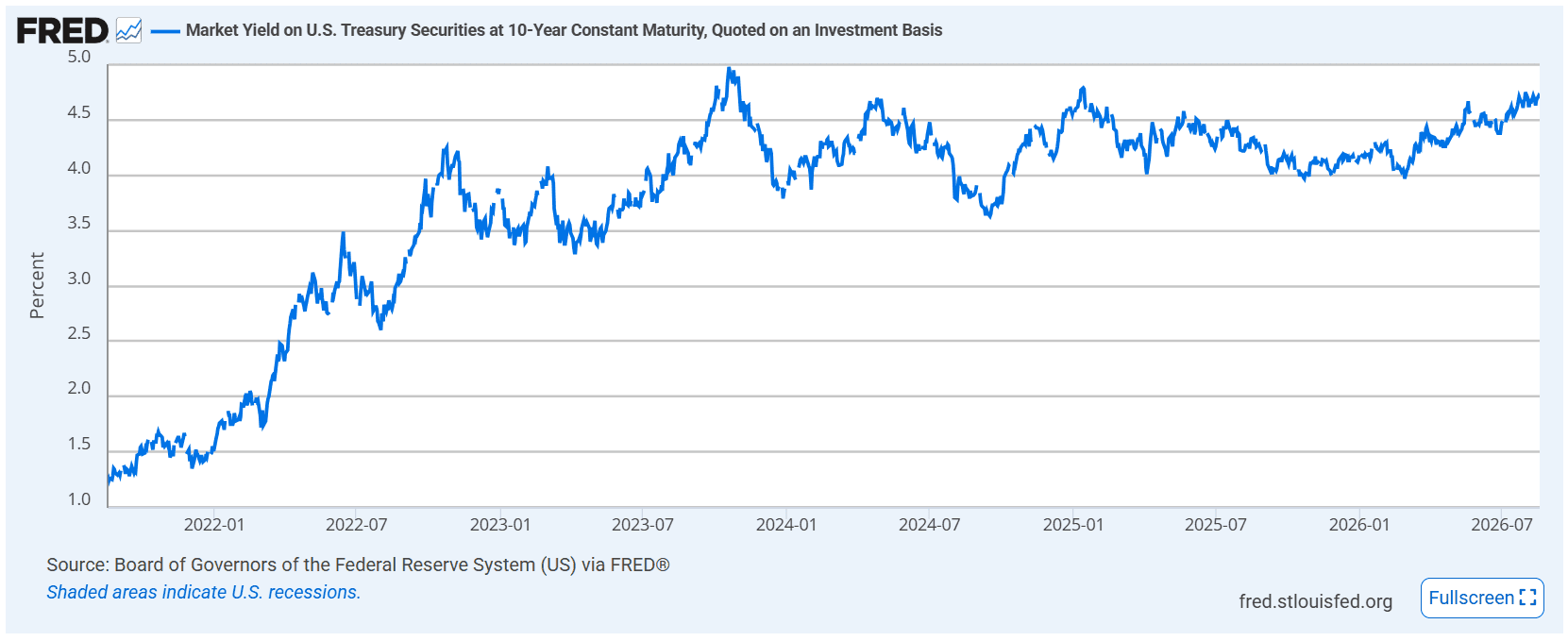
As of mid-August 2026, the 10-year Treasury yield traded near 4.65% after touching a 20-month high of 4.75%, while the 30-year yield sat around 5.2% after hitting a 19-year high above 5.3% — the kind of move that put pressure on Treasury to intervene at the long end.
Reading Yield Curve Shifts Like a Trader
Rather than treating yield curve movement as background noise, traders and systematic investors tend to treat it as an input:
Steepening or flattening trends can signal shifting expectations around growth and inflation
Divergence between short- and long-end yields can flag policy intervention rather than organic market pricing
Curve inversions or distortions have historically preceded shifts in broader market positioning
For a technical grounding in how duration and rate sensitivity are actually measured, CFA Institute's overview of interest rate risk and return is a useful primer. Treating the yield curve as a live data input, not a static chart, is one of the clearer differences between passive fixed income holders and those actively managing a fixed income strategy.
Rethinking Bond Portfolio Allocation
None of this means bonds are obsolete — it means the assumptions behind a given bond portfolio allocation deserve fresh scrutiny. Questions worth revisiting include:
Is duration exposure concentrated in a way that assumes rate stability that may no longer hold?
How much of the current allocation depends on yield curve behavior staying "normal"?
Would a more dynamic, rules-based approach to allocation respond faster to these shifts than a static one?
Research from Vanguard on threshold-based rebalancing strategies found that rebalancing based on allocation drift, rather than a fixed calendar schedule, generated a modest but consistent annual return benefit compared to calendar-only approaches — evidence that how a portfolio is rebalanced, not just what it holds, affects outcomes.
These aren't questions with a single universal answer — they depend on individual risk tolerance, time horizon, and existing exposure. But they are increasingly hard to ignore given current conditions.
Why Systematic Investing Is Gaining Ground
This is where systematic investing has drawn increasing interest from self-directed investors. Rather than relying on periodic manual review, a systematic approach applies consistent, rules-based logic to portfolio decisions — removing emotion and recency bias from the process, and allowing for faster response to changing rate and yield curve conditions.
This shift mirrors a broader trend we explored in our review of how systematic strategies handled 2025's market volatility.
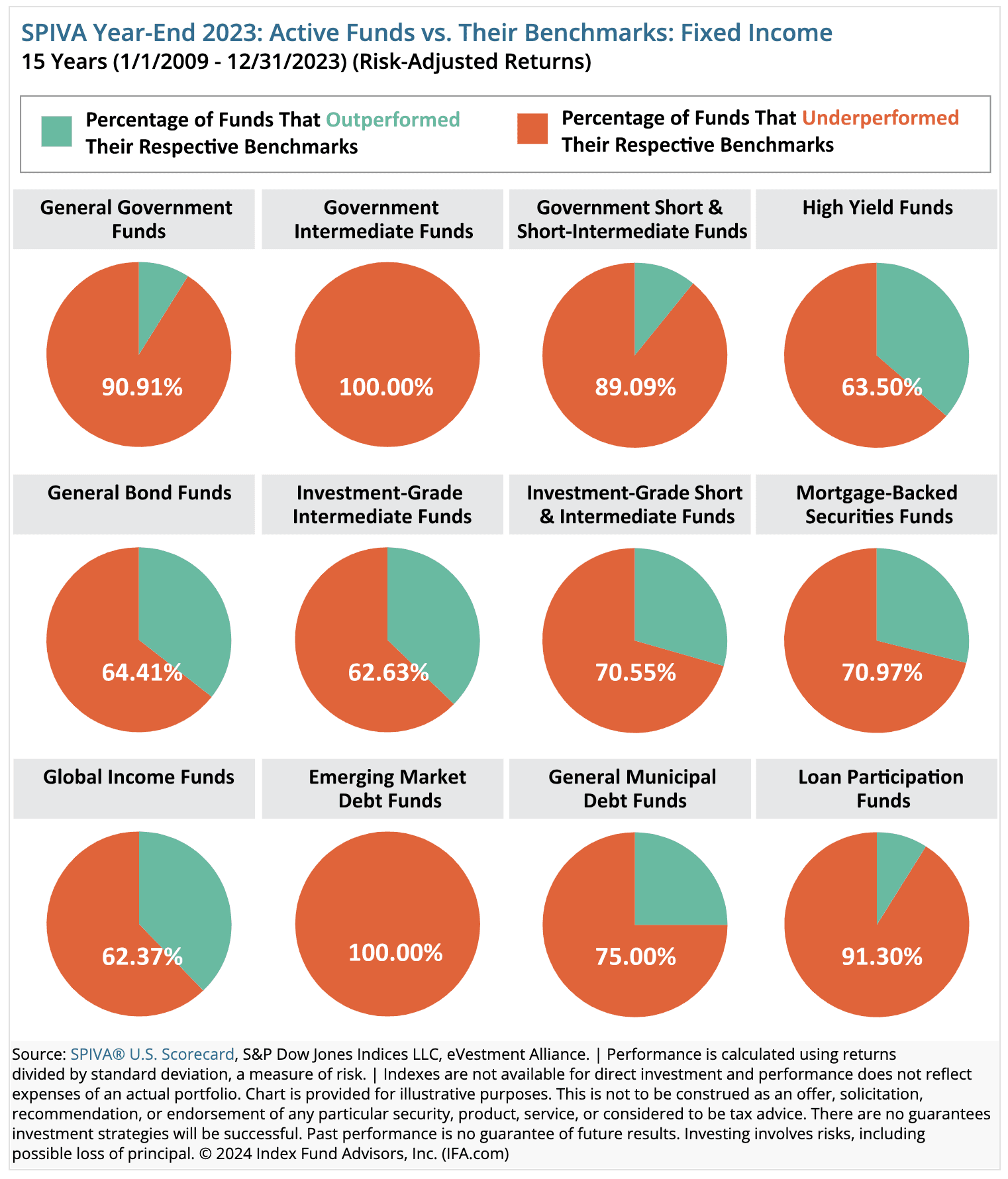
It's also worth noting that discretionary, actively managed bond funds have historically had a mixed track record against their benchmarks: S&P Dow Jones Indices' SPIVA scorecards have consistently found that most actively managed bond funds underperform their benchmark indexes over longer time horizons — one reason disciplined, benchmark-aware, rules-based approaches have drawn growing interest.
How Systematic Investing Approaches Portfolio Rebalancing
Systematic investing frameworks typically handle portfolio rebalancing differently than manual approaches:
Rules are defined in advance, based on specific triggers (rate movement, duration thresholds, yield curve shape) rather than discretionary judgment calls
Rebalancing occurs on a consistent cadence or trigger basis, rather than whenever an investor happens to review their portfolio
Backtestable logic allows the same rules to be evaluated against historical rate environments before being applied going forward
This threshold-based logic is the same principle behind AI-powered portfolio rebalancing, which applies rules-based triggers rather than manual review cycles.
For investors reassessing their fixed income strategy in light of current conditions, this kind of structured, repeatable approach offers a way to stay responsive without needing to manually track every policy announcement or yield curve shift.
How Surmount's AlphaFactory Income Strategy Approaches This
Everything discussed above points to the same underlying challenge: fixed income exposure built on static assumptions is harder to justify when duration risk, rate volatility, and yield curve distortion are all moving at once. This is the kind of environment systematic, rules-based approaches are designed to navigate.
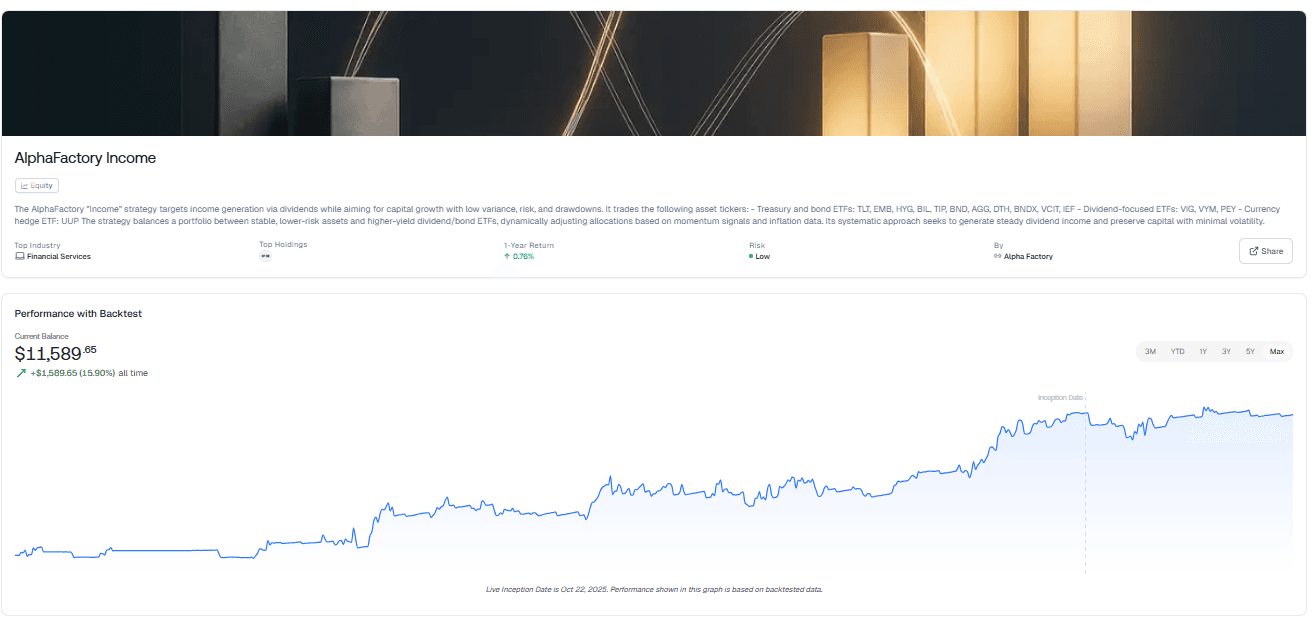
Surmount's AlphaFactory Income strategy was built around this exact dynamic. Rather than relying on a fixed, manually reviewed bond allocation, it applies a systematic framework across a diversified basket of Treasury, bond, and dividend-focused ETFs — including exposure to short-duration instruments, inflation-protected securities, and international/currency-hedged fixed income.
What makes this approach relevant to the fixed income strategy shift discussed above:
Dynamic allocation, not static positioning. The strategy adjusts its mix between lower-risk assets and higher-yield dividend/bond ETFs based on ongoing momentum signals and inflation data, rather than a fixed allocation set once and left alone.
Diversified duration exposure. By spanning short-term, intermediate, and long-duration instruments, the strategy isn't concentrated in a single point on the yield curve.
Built-in inflation responsiveness. Inflation-protected securities are part of the underlying basket, so the strategy's logic accounts for the same inflation/rate dynamics driving current yield curve distortion.
Systematic, rules-based rebalancing. Allocation shifts follow defined criteria rather than manual, periodic review.
Currency-hedged component. A currency hedge reflects the dollar dynamics tied to current Treasury and rate policy.
Worth knowing: dynamic, rules-based allocation doesn't eliminate interest rate risk or market risk — it changes how that risk is managed. Bond and dividend ETFs can still lose value as rates and credit conditions shift, and no systematic strategy guarantees a specific outcome or protects against loss.
For investors who've followed the case made here — that today's fixed income environment calls for more active, structured thinking than a "set it and forget it" allocation — this is one way to see how that thinking translates into a rules-based portfolio approach. You can explore how the AlphaFactory Income strategy is structured directly on the Surmount platform.
Frequently Asked Questions
What is a fixed income strategy in a rising or volatile rate environment?
A fixed income strategy refers to how an investor allocates across bonds and bond-like assets based on duration, credit quality, and rate expectations. In volatile conditions, that allocation often needs closer, more frequent review.
Why does duration risk matter more right now?
Duration risk reflects how sensitive a bond's price is to rate changes. When debt maturities shorten across the market, portfolios face more frequent repricing and greater exposure to short-term rate volatility.
How does the yield curve signal changes in fixed income strategy?
The yield curve reflects the relationship between short- and long-term rates. Shifts or distortions in that curve — including from policy intervention — can signal that assumptions behind a fixed income allocation need revisiting.
What's the difference between systematic investing and traditional bond investing?
Systematic investing applies predefined, rules-based logic to allocation and portfolio rebalancing, rather than relying on periodic manual review or discretionary judgment calls.
How often should bond portfolio allocation be reviewed in a volatile market?
There's no universal answer — it depends on individual risk tolerance and holdings. However, environments with active duration risk and yield curve distortion generally call for more frequent review than a "set and forget" approach.
Surmount AI, Inc. (“Surmount”) is a financial technology company and is not a registered investment adviser. Surmount provides an automated investing platform and software tools that enable self-directed investors to discover, build, and execute investment strategies. Nothing in this article constitutes investment advice, a recommendation to buy or sell any security, or a solicitation of an offer to buy or sell securities. Past performance is not indicative of future results. Any historical returns, expected returns, or probability projections are hypothetical in nature and may not reflect actual future performance. All investing involves risk, including the possible loss of all principal invested. Automated strategies do not guarantee a profit or protect against loss. For more information, see our terms and conditions.

Automate any portfolio using data-driven strategies made by top creators & professional investors. Turn any investment idea into an automated, testable, and sharable strategy.