AI Proof Investments: The Strategy That Holds Up
Surmount Blogs
Discover AI proof investments that protect your portfolio with real assets, REITs, and passive income strategies.

AI Proof Investments: The Strategy That Holds Up
Most investors are still asking which stocks will benefit from AI. The smarter question is: which investments survive regardless of what AI does? That distinction is where serious portfolio strategy begins today.
Why AI Disruption Is Forcing a Rethink
The AI revolution is not just a technology story — it is a capital allocation story. As AI systematically removes the competitive moats that once made businesses valuable, the assumptions underpinning most traditional portfolios are quietly breaking down.
How AI Disruption Investing Differs From Traditional Risk Management
Traditional risk management asks: how do I protect against a market downturn? AI disruption investing asks a harder question: how do I protect against permanent value destruction in businesses that may never recover?
SaaS companies losing 50–80% of their value was not a cycle — it was a structural repricing. Investors who treated it as temporary are still waiting for a bounce that is not coming.
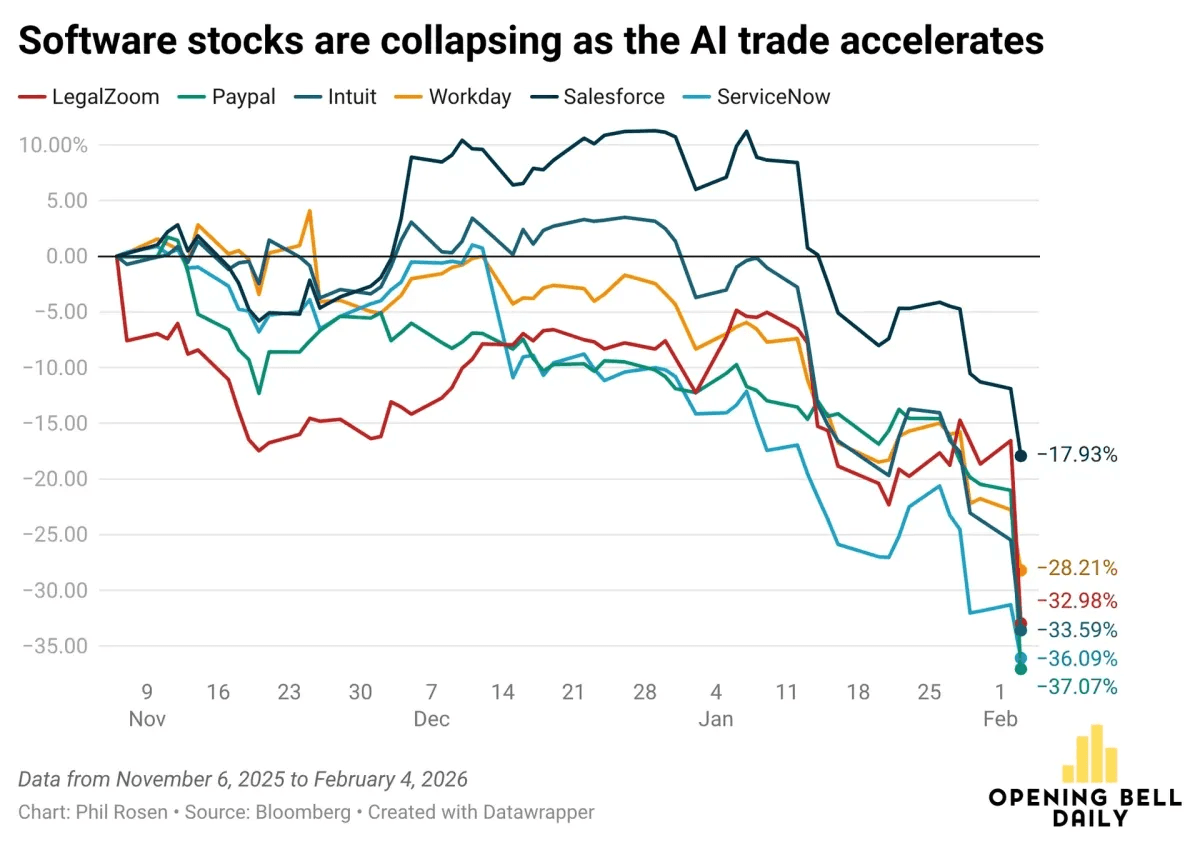
The Sectors Most Exposed to AI Disruption
Content, software, professional services, and customer support are already being restructured from the ground up. Financial analysis, legal research, and logistics optimisation are next. Any business whose core value is information processing — rather than ownership of physical, scarce assets — faces an existential question about its long-term earnings power.
What Makes an Investment Truly AI Resistant
An AI resistant investment has two qualities: its supply cannot be replicated by software, and its demand does not depend on any single industry remaining intact. Physical scarcity and essential utility are the two criteria that matter.
AI Resistant Stocks vs. AI Resistant Asset Classes
Individual AI resistant stocks exist, but they carry concentration risk and require ongoing judgment calls as business models evolve. AI resistant asset classes — particularly real assets and infrastructure — offer the same protection with built-in diversification. For systematic investors, asset class exposure is almost always the more durable approach.
The Case for Real Asset Investment Strategy
A real asset investment strategy anchors a portfolio in things the physical world cannot simply produce more of: land in supply-constrained markets, infrastructure that took decades and billions to build, natural resources with genuine scarcity. These are the foundations of an AI proof portfolio.
Why Physical Assets Have a Supply Ceiling AI Can't Break
You cannot prompt an AI to generate a new industrial port, a cell tower network, or a solar farm already connected to the grid. Permits, land rights, construction timelines, and capital costs create natural supply ceilings that software cannot compress. That scarcity is precisely what underpins long-term value.
Building a Defensive Investment Strategy Around Real Assets
A defensive investment strategy built on real assets is not about hiding from risk — it is about choosing risks that are understandable and bounded. Rising demand for housing, logistics, and energy infrastructure does not disappear in an AI-driven economy. If anything, it accelerates.
AI data centres need power. E-commerce needs last-mile storage. Growing populations need affordable housing. Owning the physical infrastructure that serves these needs is one of the most straightforward ways to stay on the right side of the disruption.
REIT Investing Strategy: The Systematic Investor's Edge
A REIT investing strategy offers something most direct real estate ownership cannot: liquidity, diversification across geographies and sub-sectors, and professional management — all within a structure mandated to return the majority of income to investors.
For systematic investors, REITs are also one of the few asset classes where a rules-based approach to entry, rebalancing, and exit can be applied cleanly.
If you're weighing REITs against owning rental property directly, the practical differences are worth understanding before you allocate.
How to Use an Algorithmic Investing Strategy to Execute This Thesis
This is where structure becomes a genuine edge. An algorithmic investing strategy removes the behavioural drag that causes most investors to abandon a sound thesis at exactly the wrong moment. Rather than manually monitoring valuations and rebalancing positions, a rules-based system handles execution consistently — which is the difference between having a strategy and actually running one.
Inflation Hedge Investments Within an AI Proof Portfolio
Inflation hedge investments belong inside any AI proof portfolio for one straightforward reason: the same macro forces accelerating AI disruption — government deficits, money supply expansion, supply chain fragility — are also inflationary. Real assets with long-term leases tied to inflation escalators provide natural protection. You are not just hedging AI risk; you are hedging the broader macro environment simultaneously.
Portfolio Diversification Strategy: Allocating Across Real Asset Classes
A robust portfolio diversification strategy within real assets means spreading exposure across sub-sectors — residential, industrial, timber, energy infrastructure, and communications infrastructure — and across geographies. Each sub-sector has different demand drivers, different lease structures, and different sensitivities to interest rates, and genuine diversification here materially reduces drawdown risk.
Before treating real assets as a standalone allocation, it helps to understand what actually makes an alternative investment functional within a broader portfolio, as not all alternatives earn their place.
Dividend Investing Strategy as a Signal of AI Resilience
A dividend investing strategy applied to real assets serves a dual purpose.
The income itself is valuable, but the dividend is also a signal. This means the underlying asset generates enough consistent cash flow to distribute regularly, regardless of what the broader market is doing.
That is a quality filter as much as an income strategy. If you stick with the right picks, you can also enjoy healthy growth along the way too.
Before chasing yield, however, it's worth running any candidate through a disciplined dividend safety checklist to separate sustainable payouts from traps.
Stop Theorising. Start Owning the Assets AI Can't Touch.
The case for AI proof investments is not complicated. The world is being restructured by a technology that can replicate information, automate processes, and displace entire business models at near-zero marginal cost. What it cannot do is build a new industrial port, manufacture land in a supply-constrained city, or generate a cell tower network already embedded in critical infrastructure.
The investors who will come out ahead of this shift are not the ones who found the best think-piece on the topic. They are the ones who acted on the thesis systematically — before the rest of the market caught up with the same conclusion.
That is exactly what Surmount's Global Real Estate Exposure strategy is built for.

This is not a speculative bet on a single sector or geography. It is a diversified portfolio of approximately 30 of the world's highest-quality publicly traded real assets — selected specifically for their Sharpe ratios, financial strength, and ability to generate consistent, compounding returns across market cycles. It spans residential, industrial, and infrastructure real estate across multiple geographies, giving you the kind of diversification that individual stock picking simply cannot replicate efficiently.
Every dimension of the thesis covered in this piece — inflation protection, passive income, AI resistance, and war resilience — is embedded in the structure of this strategy. It rebalances automatically every 30 days, so you are never overweight a single position as market conditions shift. No manual monitoring. No emotional decision-making at the wrong moment. Just disciplined, systematic exposure to the asset class that has outlasted every technological disruption in modern history.
The valuation window right now is real. Capital has been flooding into tech for years, leaving real asset valuations at historically attractive levels relative to equities. That gap does not stay open forever. When institutional allocators reach the same conclusion — and the data suggests they are already starting to — the repricing will be fast.
The thesis is sound. The strategy is ready. The only variable is whether you act on it.

Automate any portfolio using data-driven strategies made by top creators & professional investors. Turn any investment idea into an automated, testable, and sharable strategy.