Why Tech Stocks Fall When Rates Rise (And What to Do)
Surmount Blogs
Why tech stocks fall when rates rise — and how systematic investors can protect their portfolios when the Fed moves.

Why Tech Stocks Fall When Rates Rise (And What to Do)
If you’ve ever watched a Federal Reserve press conference and seen your tech portfolio drop the next morning, you’re not imagining things. There’s a direct, mechanical relationship between interest rates and tech stock valuations, and understanding it is one of the most useful edges a self-directed investor can have.
Here’s what’s actually happening, and more importantly, what you can do about it.
Why Tech Stocks Fall When Rates Rise
The Discounted Cash Flow Problem With Growth Stocks
Tech companies are valued differently from banks or utility stocks. Most of their value comes not from what they earn today, but from what investors expect them to earn years from now. Those future earnings are converted into today’s dollars using a process called discounted cash flow analysis — and the discount rate used in that calculation is tied directly to interest rates.
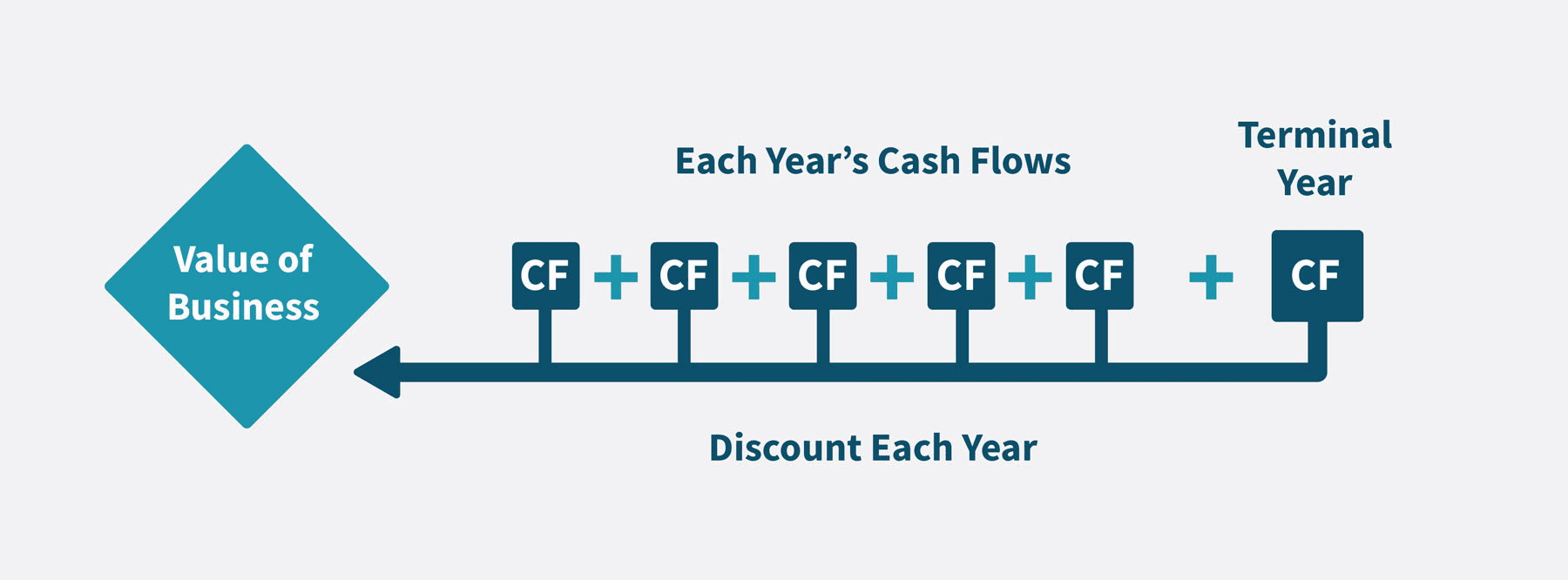
When the Fed raises rates, the risk-free rate rises. That means future cash flows are worth less in present-value terms. A company whose value depends heavily on earnings five or ten years out takes a much bigger hit than one generating strong cash flows today. This is why tech stocks fall when rates rise.
High Beta Stocks Feel the Pain First
High beta stocks — those that move more dramatically than the broader market — amplify this effect. Tech stocks typically carry higher beta than defensive sectors like consumer staples or utilities. When rate expectations shift, institutional investors reprice risk across their entire book, and high beta stocks are the first to be sold.
A single strong jobs report, suggesting the Fed has more room to tighten, can trigger a double-digit decline in a high-growth semiconductor stock within a single session. The underlying business hasn’t changed. The rate environment has.
How Interest Rate Risk Spreads Beyond Tech
According to research from the Bank for International Settlements, interest rate risk transmission through financial markets tends to be faster and broader than most investors anticipate. Rising rates increase borrowing costs across the economy — slowing auto sales, cooling consumer electronics demand, and tightening corporate CapEx budgets. For companies that sell into these markets, the operational impact eventually follows the valuation hit. What starts as a multiple compression becomes a revenue story.
While much attention goes to rate cuts and their effect on portfolios, the mechanics work in both directions — and rising rate environments tend to be sharper and faster in their market impact.
What the Fed Rate Hike Cycle Means for Your Portfolio Strategy
Growth Stocks and Interest Rates: A Fragile Relationship
The relationship between growth stocks and interest rates is structural, not cyclical. It doesn’t go away when markets recover. Every time rate hike expectations re-enter the conversation, high-multiple growth stocks become vulnerable — regardless of how strong their underlying fundamentals are.
This is why many systematic investors pair growth exposure with a sector rotation strategy — shifting allocations as the rate cycle evolves rather than holding static positions through every regime.
This creates a recurring pattern that systematic investors can prepare for rather than react to.
Tech Stock Volatility Is the Signal, Not the Story
When tech stock volatility spikes around Fed decisions, most retail investors focus on the price moves. Systematic investors focus on what the volatility is signaling: a regime shift in how risk assets are being priced. That distinction matters enormously for portfolio construction.
Reacting emotionally to tech stock volatility — panic selling at the bottom or doubling down at the wrong moment — is one of the most reliable ways investors underperform over time. But as we’ve explored before, volatility itself can be a long-term advantage when your portfolio is built to handle it.
How to Build a Fed-Resilient Portfolio With Systematic Investing
Defensive investing strategy isn’t about abandoning growth entirely. It’s about ensuring your portfolio has rules — not reflexes.
Systematic investing risk management means defining in advance how your portfolio behaves when volatility rises, when rate expectations shift, and when high beta positions start dragging returns. Drawdown control techniques are a core part of how algorithmic strategies handle exactly these conditions. Rather than making those decisions under pressure, you make them once, clearly, and let the strategy execute.
This is exactly the kind of environment where automated, rules-based strategies prove their value. When rate hike risk re-enters the market, a well-constructed systematic strategy can rotate toward defensive assets, reduce exposure to rate-sensitive positions, or maintain stability while the rest of the market reprices.
Waiting until after the Fed moves is already too late. The repricing happens in anticipation — which means your portfolio needs to be positioned before the press conference, not after it. If rate uncertainty has you questioning your allocation entirely, the question of where to hold capital during volatile periods is worth addressing separately.
How to Put This Into Practice: The GLD-Tech Rotation Strategy
Understanding why tech stocks fall when rates rise is one thing. Having a strategy that automatically responds to it is another.
The GLD-Tech Rotation strategy on Surmount is built for exactly this dynamic. Rather than holding a static position in tech and hoping the Fed stays quiet, it algorithmically alternates between TQQQ — a leveraged tech ETF — and GLD, the gold trust, based on which asset is outperforming. When tech momentum is strong, you’re in. When the environment shifts and gold starts leading, the strategy rotates accordingly — without you having to make that call under pressure.
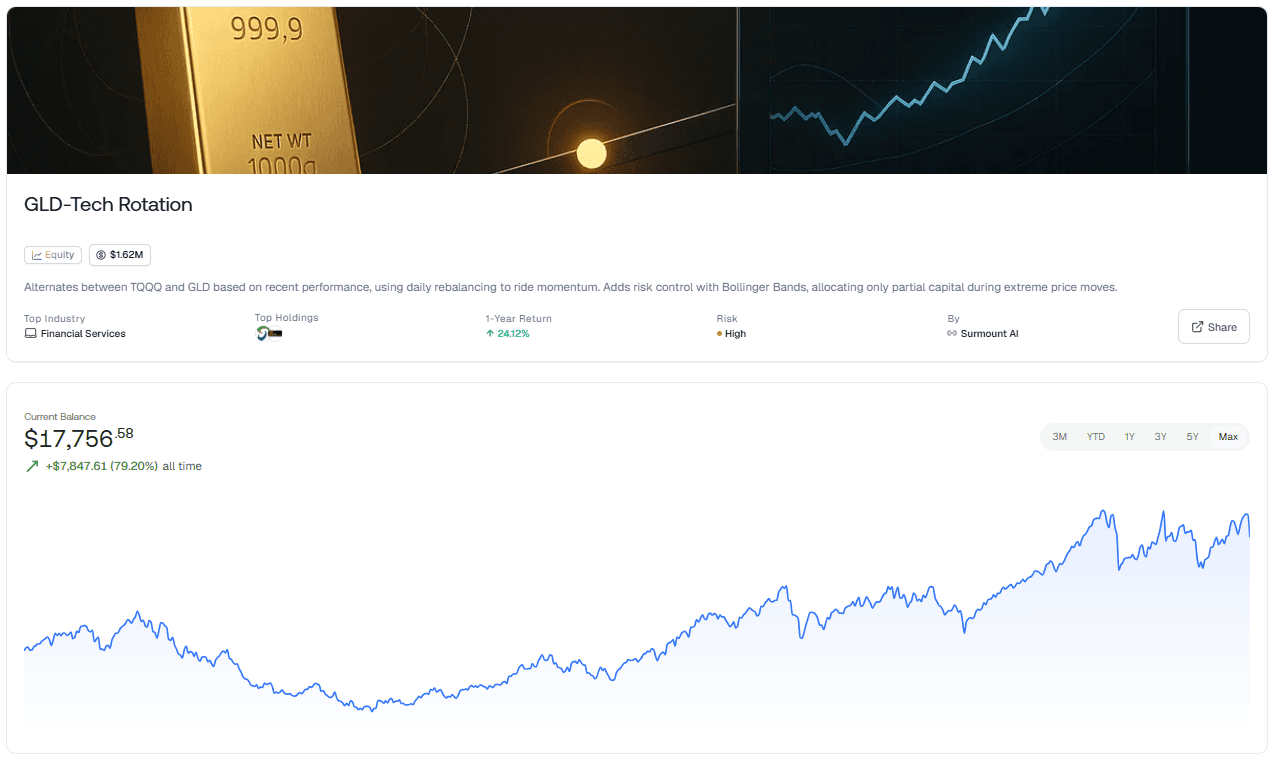
What makes it particularly well-suited to a rate-volatile environment is the built-in risk control. The strategy uses Bollinger Bands to detect when prices are moving more than 1.5 standard deviations from their 20-day moving average — a condition that frequently occurs around Fed announcements and rate surprise events. When that happens, it automatically reduces capital deployment to 50%, limiting downside exposure at precisely the moments when most investors are making their worst decisions.
This isn’t a defensive strategy that sits on the sidelines. It’s a systematic approach that stays engaged with tech when conditions support it, and rotates to the safety of gold when they don’t. That balance — staying in the game while managing tail risk — is exactly what rate-volatile markets demand.
The investors who get hurt most in rate cycles are those who either hold too rigidly or react too late. GLD-Tech Rotation removes both failure modes from the equation.
Deploy the GLD-Tech Rotation Strategy on Surmount →
Frequently Asked Questions
Why do tech stocks fall when rates rise?
Tech stocks derive most of their value from future earnings. When rates rise, those future earnings are worth less in today’s dollars — compressing valuations even when the underlying business is performing well.
Which stocks are most affected by Fed rate hikes?
High beta growth stocks — particularly in technology and semiconductors — are most sensitive to rate hikes because their valuations depend heavily on discounted future cash flows rather than current income.
What is interest rate risk in investing?
Interest rate risk is the exposure your portfolio has to changes in borrowing costs and the risk-free rate. When rates rise unexpectedly, assets priced on future growth potential tend to reprice sharply downward.
How should I adjust my portfolio strategy when the Fed raises rates?
Rather than reacting after the fact, systematic investors build portfolios with rules that respond automatically to volatility and regime shifts — rotating toward defensive assets or reducing exposure before conditions deteriorate further.
What is a defensive investing strategy during rate hikes?
A defensive investing strategy during rate hikes typically reduces exposure to high-multiple growth stocks and increases allocation to assets like gold, consumer staples, or bonds — sectors that hold value better when borrowing costs rise.

Automate any portfolio using data-driven strategies made by top creators & professional investors. Turn any investment idea into an automated, testable, and sharable strategy.