What Is Rules Based Investing? A Simple Guide
Surmount Blogs
Learn how rules based investing removes emotion from decisions and helps you invest with more discipline.

What Is Rules Based Investing? A Simple Guide
If you've spent any time on investing forums, you've probably seen the same story play out over and over. A sector gets hot, investors pile in, then leadership shifts and the latecomers are left holding the bag. The pattern repeats because most investors are reacting to what already happened — not following a plan built in advance.
That's the core idea behind rules based investing: instead of making decisions based on gut feeling or market headlines, you follow a predefined set of criteria for buying, selling, and rebalancing. The rules do the deciding. You just follow the process.
What Does Rules Based Investing Actually Mean?
At its core, rules based investing means your investment decisions are governed by clear, predetermined conditions rather than in-the-moment judgment calls. Think of it like a checklist your portfolio has to follow no matter what the market is doing that day.
Some common examples of rules include:
Rebalancing your portfolio when an asset drifts more than 5% from its target allocation
Buying a stock only when it meets specific valuation or momentum criteria
Automatically reducing equity exposure when volatility spikes past a certain threshold
Selling a position if it breaches a predefined stop-loss level
None of these decisions require you to predict the future. They just require the rule to trigger — and then you follow it.
Why Investors Are Moving Toward Systematic Investing Strategies
Market cycles have a way of testing conviction. One year, value stocks lead. The next, it's growth. Then tech stalls out and other sectors take over. Investors who chase whatever's working tend to buy in near the top and sell in frustration near the bottom.
This is exactly why more people are turning to a systematic investing strategy — an approach where decisions are based on data and process rather than trying to time each rotation. A systematic approach doesn't try to predict which sector leads next. It's built to perform reasonably well across different conditions, without requiring you to guess correctly every time.
How It Helps You Remove Emotion From Investing
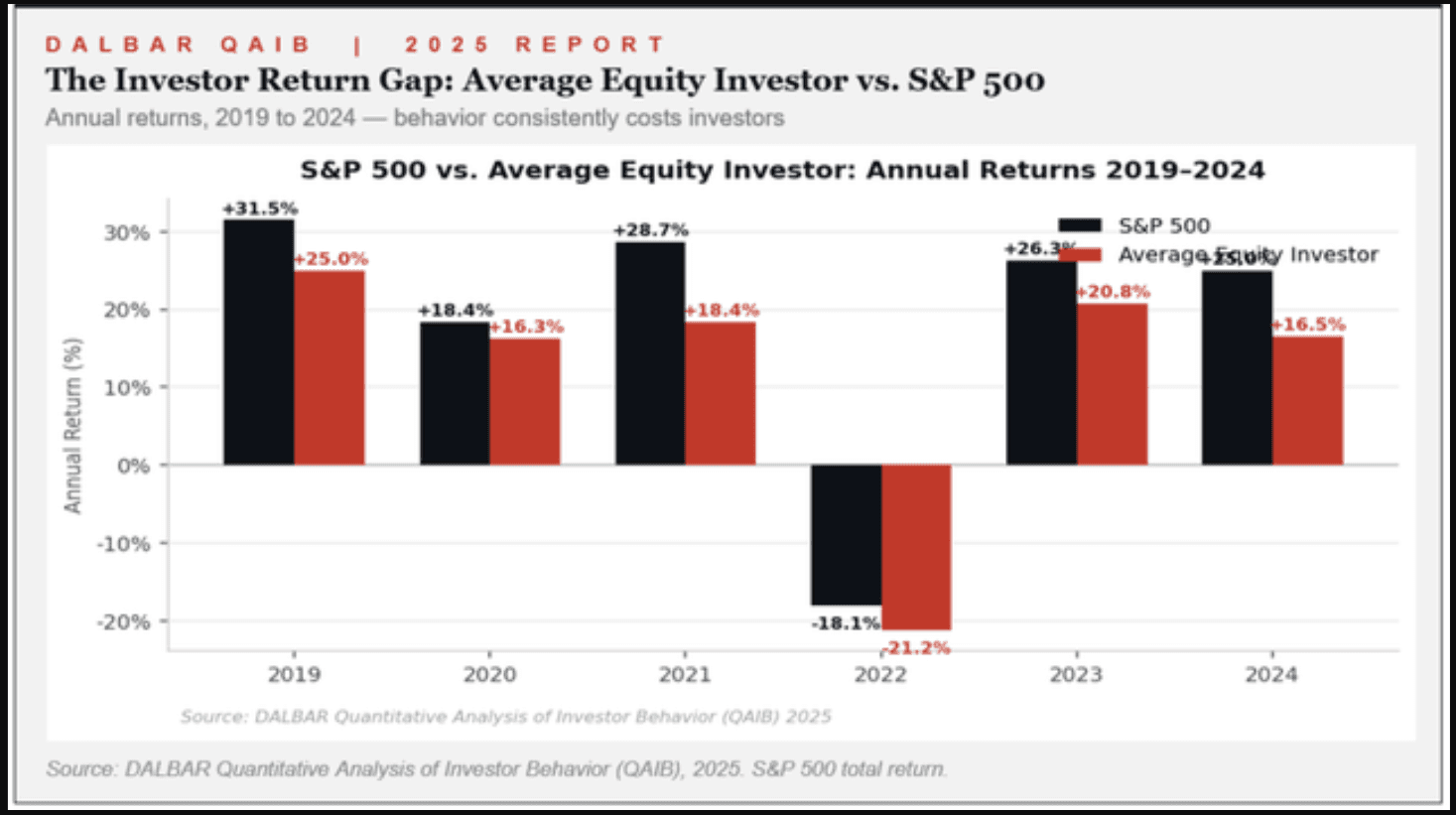
Fear and greed are often described as the two forces that drive market cycles — and for good reason. When prices are climbing, greed pushes investors to chase gains. When prices fall, fear pushes them to sell at the worst possible time.
Rules based investing works because it's designed to remove emotion from investing almost entirely. A few ways this plays out in practice:
You're not tempted to sell in a panic during a downturn, because your rules already account for volatility
You're not chasing a "hot" sector late, because entry criteria are defined in advance
You're not second-guessing your strategy daily, because the plan isn't based on daily headlines
You're less likely to abandon a sound long-term approach after a few rough months
The goal isn't to predict every market move. It's to make sure your worst instincts don't override a strategy that's statistically sound over time — the same discipline explored in our breakdown of whether you should invest during a market crash.
Rules Based vs. Discretionary Investing: What's the Difference?
It helps to compare the two approaches directly:
Rules Based Investing | Discretionary Investing | |
Decision driver | Predefined criteria | Manager or investor judgment |
Consistency | High — same logic every time | Variable — depends on mood, news, bias |
Emotional influence | Minimal | Can be significant |
Backtestable | Yes, historical performance can be tested | Difficult to test objectively |
Neither approach guarantees better returns. But rules based vs discretionary investing often comes down to consistency — a distinction we explored in more depth when breaking down why discretionary stock picking is riskier than it looks — a rules based approach behaves the same way in year one as it does in year ten, regardless of what the headlines say.
The Role of Diversification in a Disciplined Investing Strategy
One of the clearest lessons from every market cycle is this: concentration feels great until it doesn't. Investors who lean heavily into one sector often do well right up until leadership rotates — and then the recovery can take years.
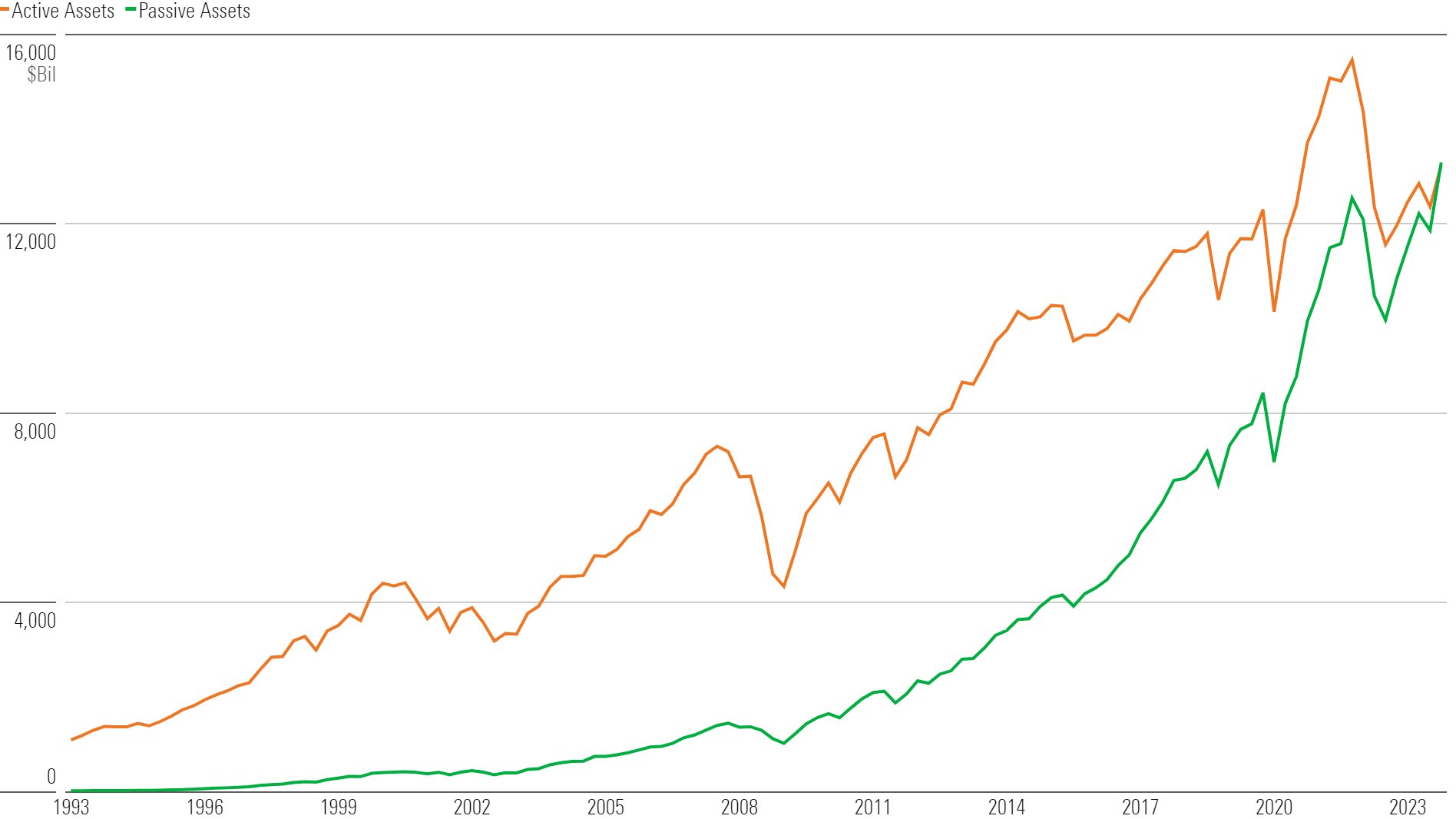
A portfolio diversification strategy is one of the most consistent ways to reduce that risk. Spreading exposure across sectors, asset classes, or strategies means no single downturn can do lasting damage to your entire portfolio — a point echoed in our look at the hidden downsides of index investing and why a purely passive approach can't solve concentration risk on its own.
This is where a disciplined investing strategy matters most. Diversification only works if you stick with it — including during the periods when a concentrated bet would have technically performed better in the short term. Rules based systems make that discipline easier, because rebalancing and exposure limits are built into the process instead of left to willpower.
How Automated Investing Strategies Apply These Rules
This is where automation becomes especially useful. An automated investing strategy takes the rules you'd otherwise have to track manually — rebalancing thresholds, diversification limits, volatility triggers — and executes them consistently, without requiring you to monitor markets every day.
Instead of manually checking allocations or trying to remember when to rebalance, the system applies the same logic every time, at scale, without hesitation or emotional interference — the same discipline behind how Warren Buffett has applied rules-based principles for over 60 years.
Getting Started With Rules Based Investing
If the idea of rules based investing appeals to you, here's a simple way to think about getting started:
Identify your goals — growth, income, capital preservation, or a mix
Decide on the rules that matter most to you (diversification limits, rebalancing triggers, risk thresholds)
Consider whether you want to build and monitor these rules manually or use a platform that automates them
Start with a strategy that matches your risk tolerance, not just recent performance
Review periodically — but resist the urge to override the system based on short-term noise
The investors who tend to do best over full market cycles aren't the ones who predicted every twist and turn. They're the ones who built a process, trusted it, and let it run.
Deploy Signal 47 Multi-Factor ETF: Put These Principles to Work
Everything this post has covered — removing emotion, sticking to predefined criteria, letting diversification do its job — is exactly what Signal 47 Multi-Factor ETF (S47M) is built to execute automatically.
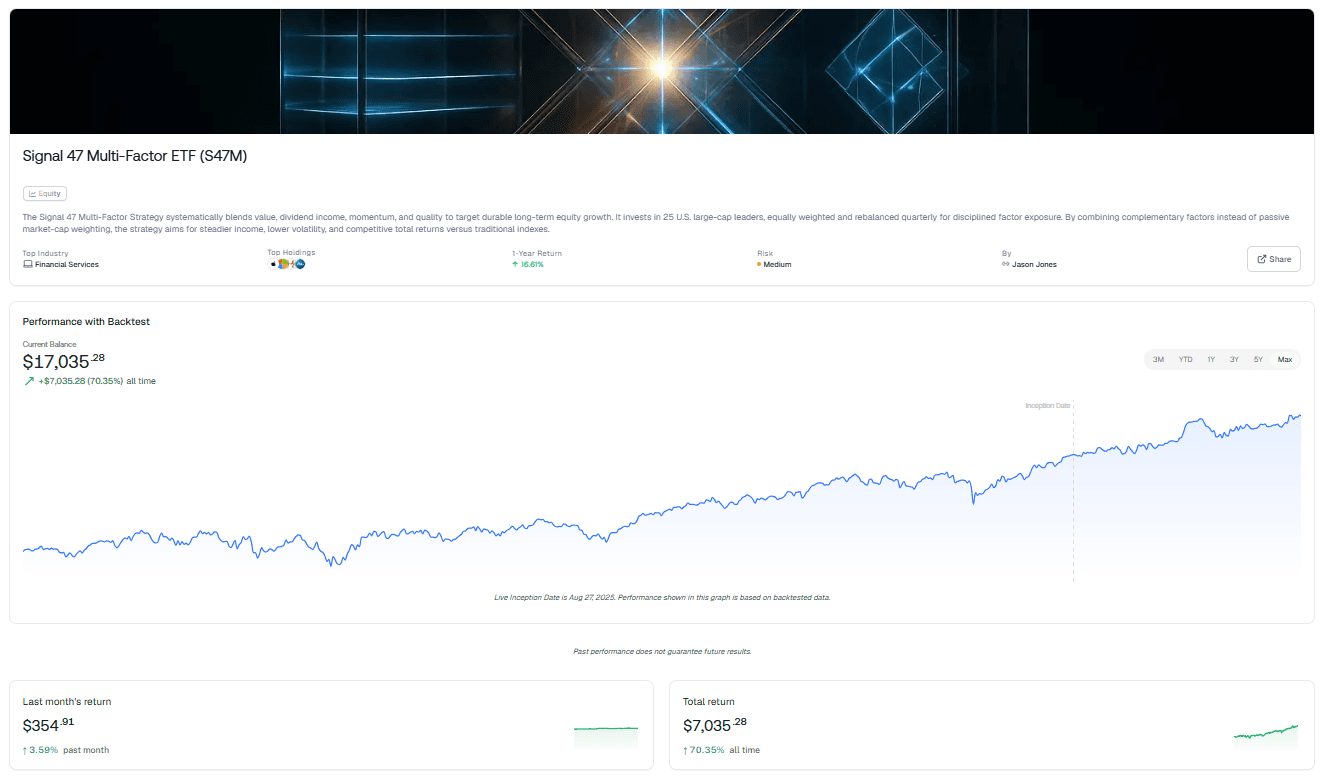
Instead of asking you to define your own rules from scratch, Signal 47 encodes a disciplined, multi-factor framework directly into your portfolio:
No emotional overrides. The strategy rebalances on a fixed quarterly schedule — the same criteria applied every quarter, regardless of headlines, market noise, or short-term sentiment
Built on four proven factors. Combines value, dividend strength, momentum, and quality signals — so your portfolio isn't relying on a single style of investing to carry the load
Diversified by design. Holds 25 U.S. large-cap leaders, equally weighted, so no single stock or sector can quietly dominate your returns
Fully transparent. Every holding and rebalancing rule is visible — you always know exactly what the strategy is doing and why
Zero manual work required. No rebalancing decisions, no second-guessing, no daily monitoring — the system runs the process for you, every quarter, without fail
If the idea of rules based investing appealed to you in this post, Signal 47 is the fastest way to put it into practice — without having to build the framework yourself.
Ready to remove the guesswork from your portfolio?
Deploy Signal 47 Multi-Factor ETF to your portfolio today and let discipline — not emotion — drive your returns.
Frequently Asked Questions
What is rules based investing?
Rules based investing means making buy, sell, and rebalancing decisions using predefined criteria instead of gut feeling. A systematic investing strategy follows the same logic every time, regardless of market conditions.
How does rules based investing remove emotion from investing?
It works by setting your decisions in advance, so you're not reacting to fear or greed in the moment. This is one of the most effective ways to remove emotion from investing during volatile markets.
What's the difference between rules based vs discretionary investing?
Rules based vs discretionary investing comes down to consistency. Rules based systems follow fixed criteria every time, while discretionary investing relies on judgment that can vary day to day.
Can automated investing strategies really replace manual decision-making?
Yes — an automated investing strategy applies the same rebalancing and risk rules consistently, without requiring you to monitor markets or make decisions manually every day.
Why is diversification important for investors?
A portfolio diversification strategy reduces the risk that one sector's downturn causes lasting damage. It only works, though, if you maintain it consistently as part of a disciplined process.

Automate any portfolio using data-driven strategies made by top creators & professional investors. Turn any investment idea into an automated, testable, and sharable strategy.