Gold Stocks vs Physical Gold: Which Wins in a Rally?
Surmount Blogs
Gold stocks vs physical gold — which performs better in a rally? See why smart investors are choosing gold miners instead.

Gold is back in the headlines. Central banks are buying it, prices are rebounding, and investors who ignored it for years are suddenly paying attention. But here’s the question most people skip straight past: should you own the metal, or the companies that mine it?
The answer might surprise you — and it could meaningfully change how you approach gold exposure in your portfolio.
Why Investors Are Rethinking How to Invest in Gold
Gold has always been the go-to safe haven — and with gold and silver near record highs again, that conversation is louder than ever. But the traditional route — buying coins, bars, or a spot ETF — comes with real constraints that active investors rarely discuss openly.
Physical Gold Has Limits Most Investors Don’t Consider
Owning physical gold sounds simple. In practice, it comes with a set of friction points:
No yield. Physical gold pays no dividends and generates no cash flow
Storage and insurance costs eat into returns over time
Low liquidity compared to equities — selling isn’t always instant or cheap
No operational leverage — when gold prices rise, your return is capped at the price move itself
The Case for Gold Stocks as a Portfolio Alternative
Gold mining companies operate differently. When the gold price rises, their revenues increase while many of their costs — energy, labor, equipment — stay relatively fixed. That gap between revenue and cost is where the outperformance lives.
Key reasons investors are rotating into gold stocks:
Operational leverage amplifies gains beyond the spot price move
Dividend potential from profitable miners adds an income layer
Equity liquidity makes entry and exit far easier than physical metal
Falling energy costs directly expand miner profit margins
GDX vs GLD: What the Performance Gap Actually Tells You
The clearest way to see this dynamic is by comparing GDX (the Gold Miners ETF) against GLD (the SPDR Gold Trust, which tracks spot gold directly).
How Gold Miner ETFs Amplify the Upside
When gold prices rise, miners don’t just benefit dollar-for-dollar. Because their cost base is relatively fixed, profit margins expand faster than the underlying metal price. A 10% rise in gold can translate into a 20–30% improvement in miner earnings — and that’s what a gold miner ETF like GDX captures.
Additional tailwinds currently supporting GDX:
Oil prices have fallen significantly from recent highs, directly reducing mining energy costs
Central bank demand is keeping a floor under spot gold prices
Volume signals in GDX have been notably above their 10-day moving average — and as any momentum investing strategy will tell you, price moving higher on strong volume is one of the most reliable signals that institutional buyers are accumulating
Gold ETF vs Gold Stocks — Understanding the Leverage Effect
Think of it this way:
GLD gives you a 1:1 relationship with the gold price
GDX gives you amplified exposure — both to the upside and the downside
GDXJ (Junior Gold Miners ETF) takes that leverage even further, with smaller companies that carry higher risk and higher reward potential
For systematic investors, this leverage effect is a feature — not a bug — when managed within a rules-based framework. It fits naturally into a broader sector rotation ETF strategy, where capital flows toward whichever asset class is leading the current cycle.
Central Bank Gold Buying and What It Means for Miners
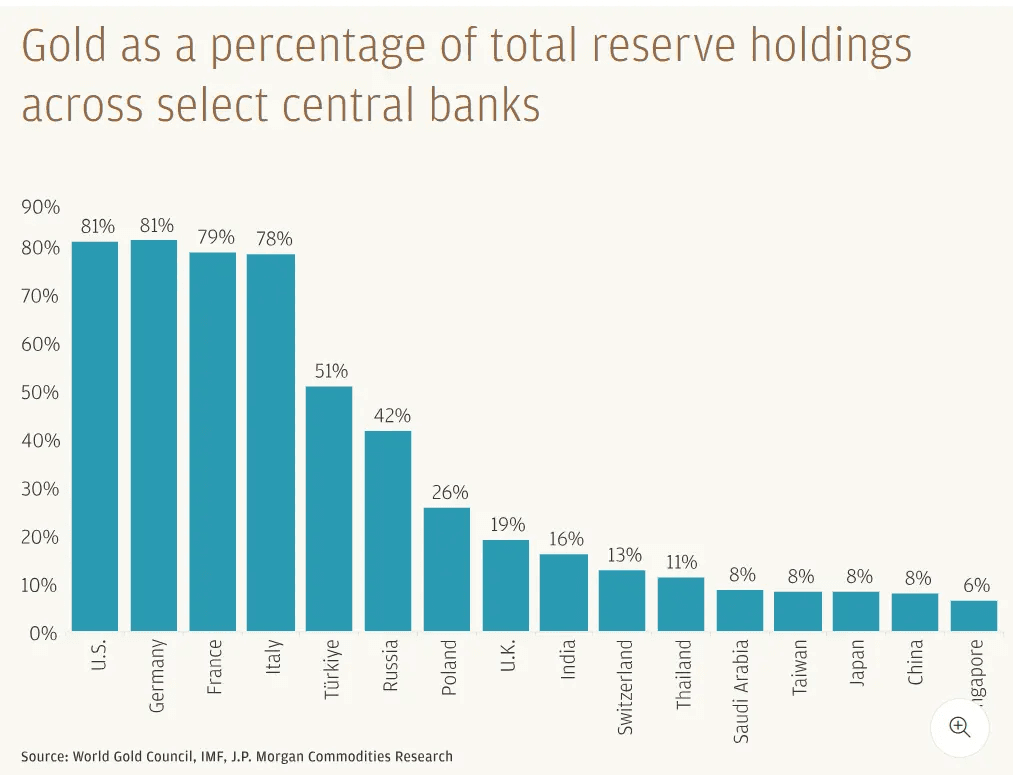
One of the most underreported drivers of the current gold environment is sustained central bank accumulation. It’s also worth noting that a strong or weakening dollar plays a significant role in gold’s attractiveness to foreign central banks, adding another layer to why sovereign accumulation has been so persistent.
Why Sustained Demand Matters More Than Spot Price
According to the World Gold Council, central banks remained net buyers of gold as recently as April 2026. Highlights include:
Poland added 14 tonnes in April alone, bringing year-to-date purchases to 45 tonnes
China added 8 tonnes — its highest monthly purchase since December 2024 — and has now bought gold for 18 consecutive months
Czech Republic continued its consistent buying streak
This isn’t speculative demand. It’s structural. When sovereign institutions are steadily accumulating gold, it creates a persistent bid under prices — which in turn supports miner revenue visibility. The
BIS data on gold’s role as a reserve asset reinforces just how deeply embedded gold has become in central bank strategy globally.
Using Gold as a Hedge Without Holding the Metal
For portfolio construction purposes, gold as a hedge doesn’t require physical ownership. Miners and gold ETFs can serve the same hedging function with added flexibility.
Gold Portfolio Allocation for the Systematic Investor
Here’s how systematic investors typically think about gold exposure:
Treat gold as a volatility dampener, not a growth engine
Allocate 5–15% of a portfolio to gold-related assets depending on macro conditions
Prefer miners over spot when oil prices are falling and margins are expanding
Use rules-based rebalancing to avoid emotional decision-making during volatile stretches — because as we’ve covered before, volatility is a feature, not a bug, for investors who have a systematic plan in place
Monitor Bollinger Band signals to avoid deploying full capital during extreme price moves
The goal isn’t to time gold perfectly. It’s to hold it systematically — and let the operational leverage of miners do the work.
How to Play Gold Miners with an Automated Strategy
Understanding the gold miners opportunity is one thing. Knowing when to rotate into gold — and when to rotate back out — is where most investors struggle. Timing that shift manually means watching charts, second-guessing signals, and fighting your own emotions every step of the way.
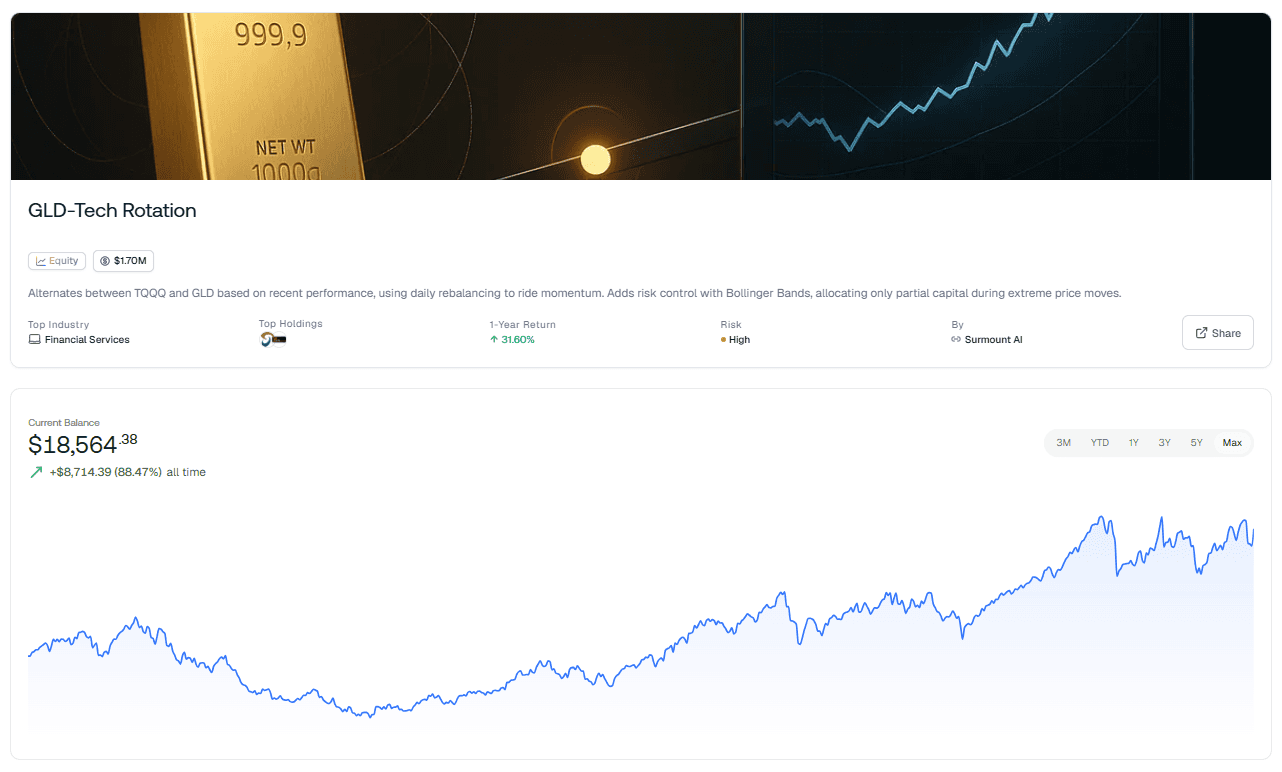
That’s exactly the problem Surmount’s GLD-Tech Rotation strategy was built to solve.
If you’re evaluating any strategy for this environment, it’s worth knowing what red flags and green flags to look for before you deploy capital.
Here’s how it works — and why it fits this environment precisely:
Rotates daily between TQQQ and GLD based on which asset is showing stronger recent performance — so it naturally shifts toward gold when tech momentum fades
Uses Bollinger Band signals to detect extreme price moves, reducing capital deployment to 50% when prices stray more than 1.5 standard deviations from the 20-day moving average — protecting you from buying into volatility spikes
Rebalances automatically every day so you’re never stuck in yesterday’s winner while the market has already moved on
Removes emotional decision-making entirely — no guessing whether gold has “topped out,” no panic-selling during dips
Captures both sides of the rotation cycle — when tech leads, you’re in TQQQ; when gold leads, you’re in GLD; the strategy follows the data, not headlines
The current macro environment — falling energy costs, persistent central bank buying, and tech momentum cooling — is precisely the kind of setup this strategy is designed to capitalize on. J.P. Morgan’s gold price forecast adds further institutional weight to the bullish case. The rotation signal is already playing out. The question is whether you’re positioned to ride it.
Deploy the GLD-Tech Rotation strategy on Surmount today — and let the algorithm do the work.
FAQ: Gold Stocks vs Physical Gold
What is the difference between gold stocks and physical gold?
Physical gold tracks the spot price directly, while gold stocks represent ownership in mining companies that profit from gold production. Stocks offer operational leverage, dividends, and higher liquidity than the metal itself. See Investopedia’s explanation of operational leverage for a deeper breakdown.
Why do gold stocks outperform gold in a rally?
Because miners have relatively fixed costs, rising gold prices expand their profit margins faster than the spot price moves. This operational leverage means gold stocks vs physical gold comparisons often favor stocks in strong rallies.
What is a gold miner ETF and how does it work?
A gold miner ETF like GDX holds a basket of gold mining companies. When gold prices rise, the ETF captures the amplified earnings growth of those miners — offering more upside than a spot gold ETF like GLD. FRED’s historical gold price data gives useful context for understanding how gold prices drive miner performance over time.
Is central bank gold buying a reliable signal for investors?
It’s one of the strongest structural demand signals available. When central banks accumulate gold consistently — as Poland, China, and others are doing now — it creates sustained price support that benefits both spot gold and gold miners.
How much gold should I have in my portfolio?
Most systematic investors allocate between 5–15% to gold-related assets, adjusting based on macro conditions like inflation, interest rates, and equity volatility. Rules-based rebalancing helps maintain that allocation without emotional interference.

Automate any portfolio using data-driven strategies made by top creators & professional investors. Turn any investment idea into an automated, testable, and sharable strategy.