Education
Smart Money Investing: Should You Follow Insider Buys?
You've probably seen the headlines: a CEO just bought $2 million of their own company's stock, and financial Twitter is convinced it's a buy signal. This is the core promise of smart money investing — the idea that watching what insiders, hedge funds, and institutions do can help everyday investors get ahead.
It's an appealing shortcut. If the people with the most information about a company are putting their own money in, shouldn't that tell you something? But the data on this is more complicated than the headlines suggest — and understanding why matters if you're building any kind of trading strategy around it.
What Does "Smart Money Investing" Actually Mean?
Smart money investing generally refers to tracking the moves of well-informed market participants — corporate insiders, institutional funds, or professional traders — on the theory that their actions reflect superior information or judgment. In practice, this usually means watching insider stock purchases disclosed through regulatory filings, or following institutional holdings reports.
The appeal is obvious: it feels like a shortcut to informed decision-making without doing the underlying research yourself. This is closely related to the broader question of copying other investors versus building your own approach.
This is the core promise of smart money investing — the idea that watching what insiders, hedge funds, and institutions do can help everyday investors get ahead. Surmount even lets you track insider and congressional trading activity directly as one input among many.
But following smart money as a standalone approach raises a harder question — does the data actually support it as a reliable strategy, or is it a pattern that only looks meaningful in hindsight?
The Data Behind Insider Buying Signals
What Happens After an Insider Buys?
Recent research analyzing tens of thousands of open-market insider purchases found a nuanced picture. Stocks bought by insiders tended to outperform the median listed company over the following year — but underperformed a broad benchmark like the S&P 500 over the same period. That gap largely reflects the outsized influence of a small number of mega-cap companies pulling the index average up, not necessarily a weakness in the insider-purchased stocks themselves.
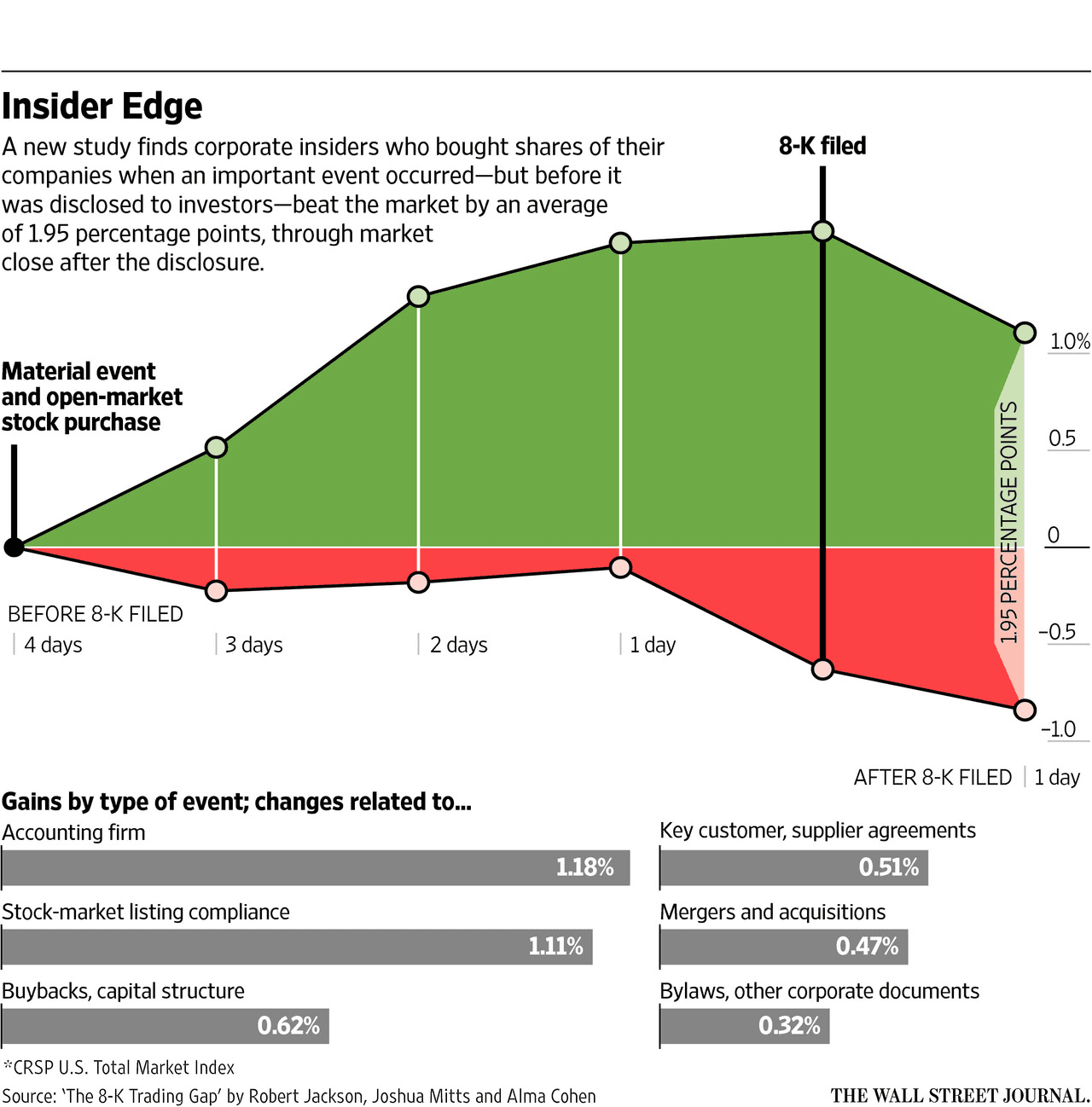
Even more telling: when researchers shifted the starting point of the analysis window, the same pattern persisted. That's a meaningful detail, because it suggests insiders may simply tend to work at a certain type of company — not that the act of buying itself functions as a reliable predictor of future performance.
Do Bigger Purchases Mean More Conviction?
Intuitively, a larger insider purchase should signal stronger conviction. The research found the opposite: the largest purchases, by dollar value, were associated with worse relative returns than smaller ones. Part of this may come down to how purchases are classified — larger transactions are more likely to include privately negotiated block trades or capital raises rather than a straightforward open-market buy, which behave very differently from an executive spending personal money on shares.
The takeaway isn't that insider buying is meaningless — it's that purchase size alone is a weak filter, and treating it as a strong conviction signal can be misleading. For a broader framework on separating real signals from noise, see how to vet a trading strategy before trusting it.
Why Following Smart Money Isn't a Standalone Strategy
The Problem With Single-Signal Investing
This is where a lot of insider buying signals-based strategies run into trouble: they treat one data point as sufficient justification for a trade. But a single signal — insider activity, an earnings beat, a hedge fund's 13F filing — rarely tells the whole story on its own. Company fundamentals, sector context, valuation, and broader market conditions all shape whether a purchase (insider or otherwise) is actually meaningful.
Relying on any one signal in isolation, however well-publicized, means ignoring the dozens of other variables that professional, systematic investors typically weigh together — a philosophy that's also shaped how Surmount thinks about data versus insider information.
Building a Smart Money Trading Strategy the Systematic Way
How Systematic Investing Filters Out Noise
This is where systematic investing offers a meaningfully different approach. Rather than reacting to a single headline-worthy signal — like one large insider purchase — a systematic strategy can be built to weigh multiple factors simultaneously: insider activity alongside valuation, momentum, sector trends, and risk parameters, all tested against historical data before being applied.
The goal isn't to predict the future perfectly. It's to reduce the chance that one noisy, unreliable signal drives an entire decision — the same discipline that goes into avoiding overfitting and false patterns in strategy backtests.
A smart money trading strategy built this way treats insider activity as one input among many, rather than a standalone green light.
For investors interested in exploring how a multi-factor, rules-based approach handles signals like this, automated strategy platforms are increasingly built to combine these variables systematically rather than leaving investors to interpret a single data point on their own.
How Surmount Approaches "Smart Money" Investing Systematically
If the data on insider buying signals shows anything, it's that no single data point — however headline-worthy — tells the whole story. Given this drop, Signal 47 Multi-Factor ETF stands out.
Rather than reacting to one signal in isolation, Signal 47 combines four distinct, complementary factors into a single rules-based approach:
Value — screens for companies trading at attractive valuations with strong free cash flow
Dividend strength — favors established payers with stable or growing distributions
Momentum — considers stocks showing consistent price strength and market leadership
Quality — weighs balance sheet resilience and durable business models
The strategy holds 25 U.S. large-cap companies across sectors including technology, healthcare, financials, and industrials, and rebalances quarterly to maintain factor discipline — removing the guesswork of deciding when to react to any single piece of news or data.
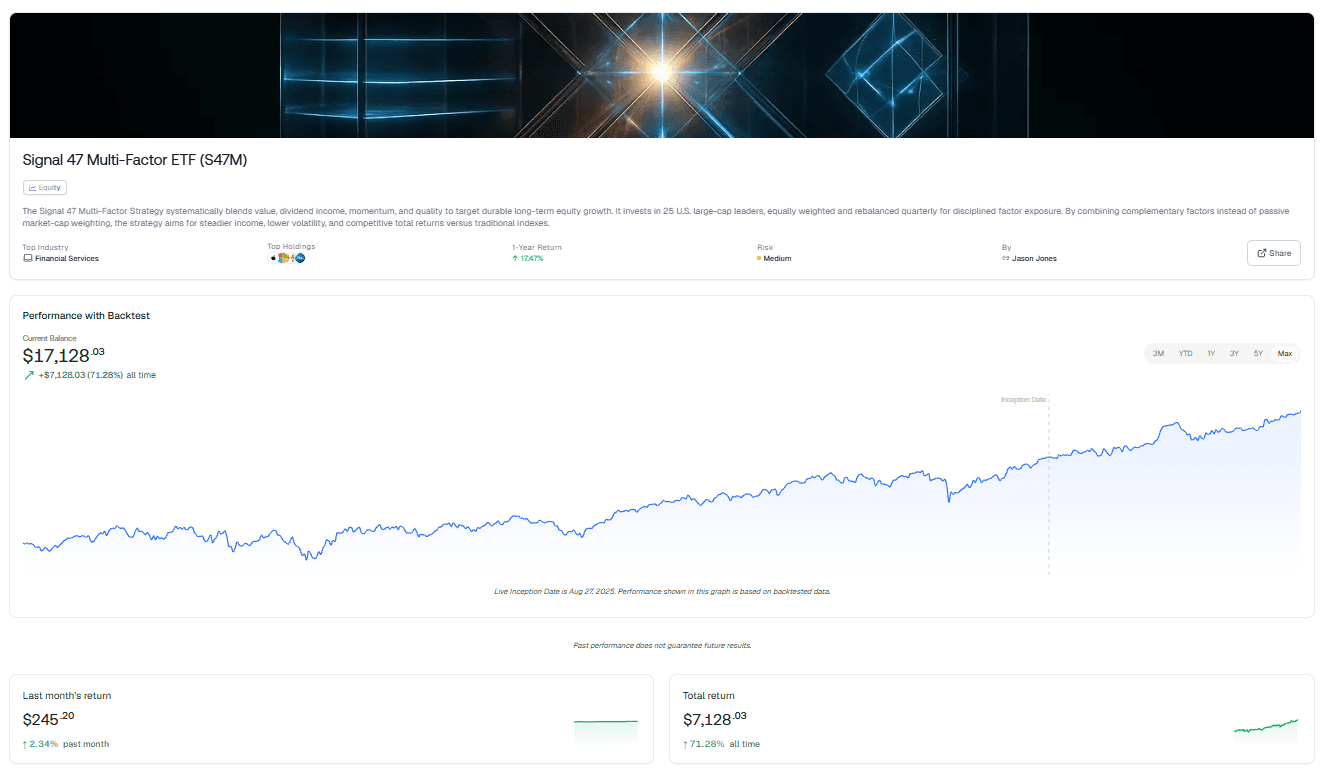
For readers who found the insider-buying data interesting but are wary of building a strategy around one signal, this is worth a look. Explore how the Signal 47 Multi-Factor ETF handles factor-blending on the Surmount platform to see whether a systematic, multi-factor approach fits how you think about markets.
As with any investment strategy, past performance and backtested results are not indicative of future outcomes. All strategies carry risk, including potential loss of principal, and factor-based approaches do not guarantee lower volatility or better returns than the broader market. Investors should carefully consider their own financial situation and risk tolerance before evaluating any strategy.
Frequently Asked Questions
What is smart money investing?
Smart money investing refers to tracking the moves of insiders, institutions, or professional traders on the theory that their activity reflects superior information. Research shows the results are more mixed than the term suggests.
Is following smart money a reliable strategy?
Not on its own. Studies on insider buying signals show mixed results depending on the benchmark used, and purchase size doesn't reliably predict outperformance.
Do bigger insider stock purchases mean more conviction?
Not necessarily. Research found the largest insider stock purchases were associated with weaker relative returns than smaller ones, often due to how large transactions are classified.
Why is systematic investing better than following one signal?
Systematic investing weighs many factors together — value, momentum, quality, and more — rather than relying on any single data point, which reduces the risk of overreacting to noise.
How does a smart money trading strategy differ from copy trading?
A smart money trading strategy built on multiple factors differs from simple copy trading, which mimics a single investor or signal source without broader validation or risk controls.
Automate any portfolio using data-driven strategies made by top creators & professional investors. Turn any investment idea into an automated, testable, and sharable strategy.