The Hidden Downsides of Index Investing You Should Know
Surmount Blogs
Explore the real downsides of index investing — tracking error, concentration risk — and smarter alternatives.

The Hidden Downsides of Index Investing You Should Know
Index investing has become the default advice for almost every new investor. “Just buy an index fund and forget about it” is repeated so often it's treated as gospel. But like most simple advice, it leaves out some important nuance. Understanding the downsides of index investing doesn't mean abandoning the strategy — it means knowing what you're actually signing up for.
How Index Funds Work (And Why They're So Popular)
Index funds are designed to mirror a benchmark, like the S&P 500, by holding the same securities in roughly the same proportions — a foundational form of diversification that most investors rely on without a second thought. Their appeal is obvious:
Low fees compared to actively managed funds
Instant diversification across hundreds of companies
No need to pick individual stocks
Decades of data showing strong long-term returns
For most investors, this “set it and forget it” approach works well. But the phrase “forget about it” hides a few uncomfortable truths.
The Downsides of Index Investing Nobody Talks About
The downsides of index investing rarely show up in beginner guides, but they matter more than most people realize — especially as passive investing has grown to dominate the market.
Index Fund Tracking Error — When Your Fund Doesn't Match the Market
Many investors assume their index fund performs identically to the index it tracks. In reality, small discrepancies — known as index fund tracking error — are common. According to Morningstar's research on index fund tracking differences, these gaps can come from:
Fund fees and operating costs
Timing differences in dividend reinvestment
Slight variations in holdings versus the benchmark
Cash flow from investor buying and selling
Over short periods, these gaps can be surprisingly noticeable. Vanguard's own tracking research shows that over the long run, they tend to average out — but they're a reminder that “passive” doesn't mean “identical.”
Index Fund Concentration Risk — Is the S&P 500 Too Concentrated?
Because many major indexes are weighted by market capitalization, the largest companies make up an outsized share of the fund. This creates index fund concentration risk: if a handful of mega-cap stocks stumble, your “diversified” fund can take a much bigger hit than expected. As we've explored in our breakdown of hidden concentration costs, this isn't just a theoretical risk — it can quietly erode returns for years.
This raises a fair question many investors are now asking: is the S&P 500 too concentrated in a small number of dominant companies? S&P Global's index concentration data shows that when the top 10 holdings represent a large percentage of total index weight, true diversification becomes more theoretical than real.
Passive Investing vs Active Investing — What You're Really Giving Up
The passive investing vs active investing debate often focuses on fees and returns, but as we've discussed in active vs. automated investing, there's a less-discussed tradeoff: control. With a pure index fund, you have no ability to:
Adjust exposure during volatile markets
Tilt toward sectors you have conviction in
React to changing economic conditions
Manage risk beyond simply holding through downturns
For hands-off investors, this is a feature, not a bug. But for those who want some responsiveness in their portfolio, it can feel limiting. Research from the CFA Institute on active versus passive management suggests the right answer often depends on an investor's need for control, not just cost.
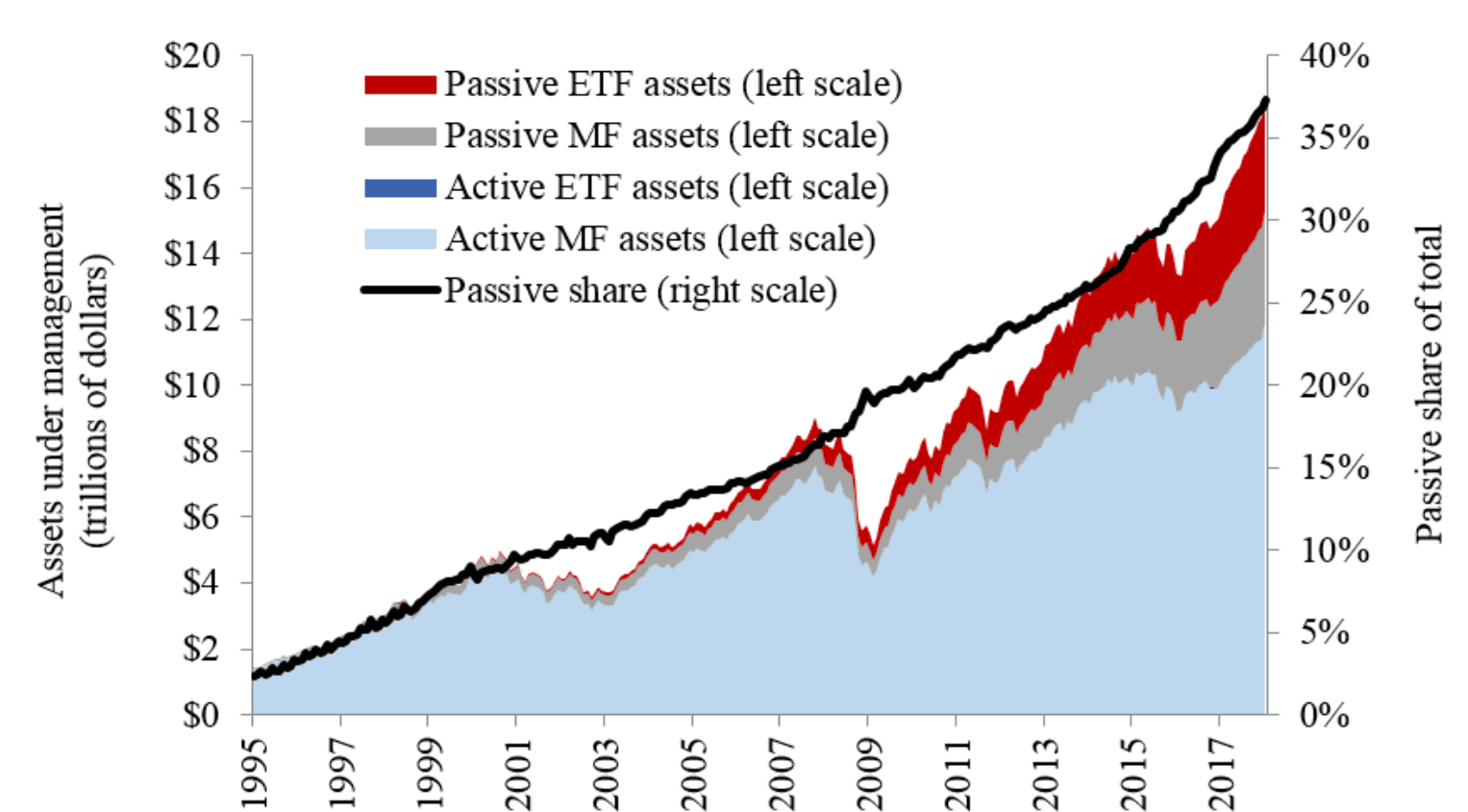
Weighing the Pros and Cons of Index Funds
To put it plainly, here's a quick breakdown of the pros and cons of index funds:
Pros:
Low cost and easy to maintain
Broad diversification in a single purchase
Strong historical long-term performance
Minimal time commitment
Cons:
Tracking error can create small performance gaps
Concentration risk in cap-weighted indexes
No flexibility to adjust to market conditions
“Average” returns by design — you won't outperform the market
Neither list is inherently right or wrong — though as we've covered in why diversification alone isn't enough, even a well-diversified index fund has limits it can't overcome on its own. DALBAR's annual investor behavior study also shows that how investors react to these limits often matters more than the limits themselves.
A Smarter Way to Diversify: Automated Investing Strategy
This is where an automated investing strategy starts to make sense for investors who like the diversification and low-maintenance appeal of indexing, but want more responsiveness than a static index fund can offer.
Rules-based, systematic strategies can incorporate the same diversification principles investors love about index funds, while adding structured logic to manage concentration risk or adjust exposure based on market conditions — without requiring you to actively trade or time the market yourself.
It's not about abandoning passive investing. It's about evolving it.
A Smarter Alternative: The Signal 47 Multi-Factor ETF
If the downsides of index investing outlined above sound familiar — tracking error you can't predict, concentration risk hiding in a fund you assumed was diversified, and zero flexibility to adjust when conditions change — you don't have to choose between “simple” and “smart.” The Signal 47 Multi-Factor ETF (S47M) was built specifically to solve these problems.
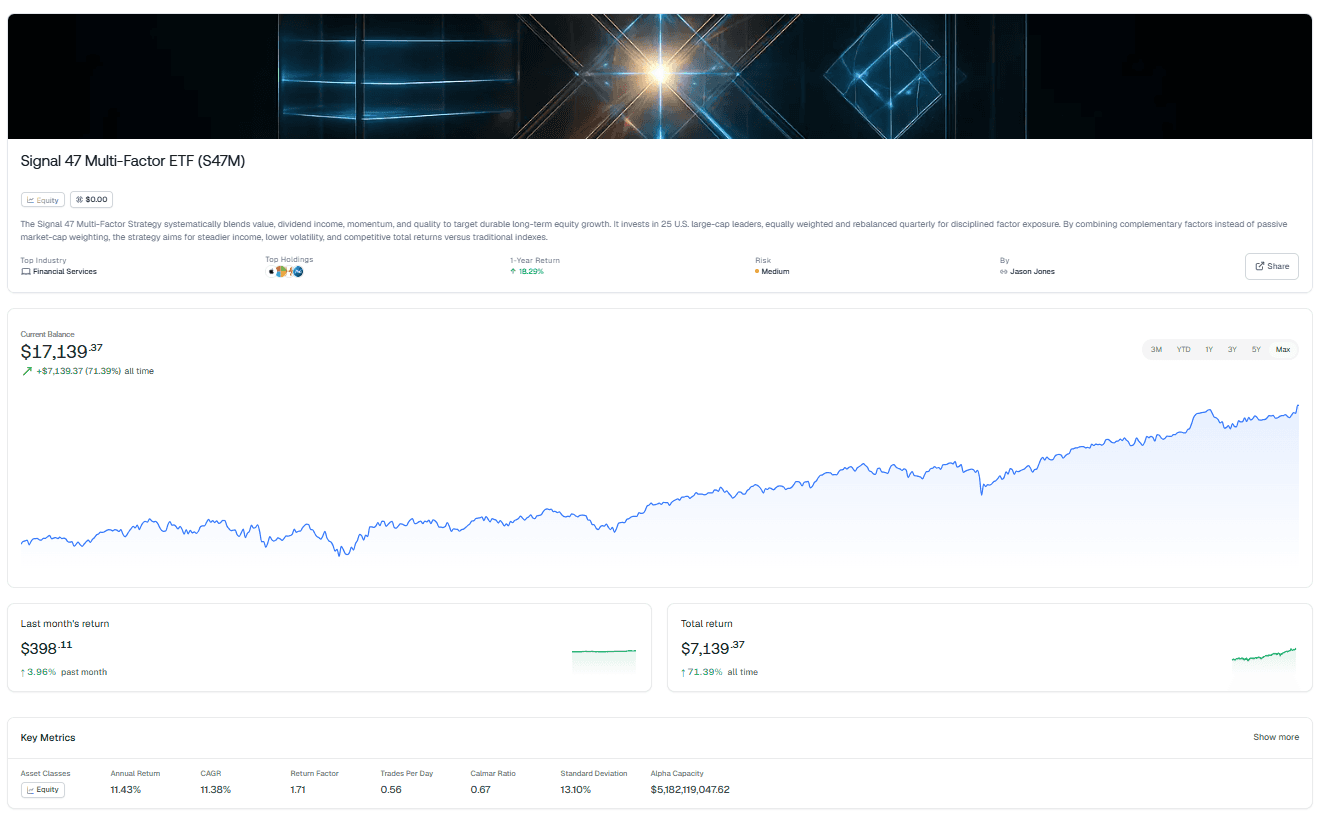
Instead of blindly weighting a portfolio by market cap (which is exactly what creates concentration risk in the first place), S47M takes a fundamentally different approach — one that's transparent, rules-based, and designed to adapt.
Why S47M Solves the Problems This Article Just Covered
No mega-cap concentration risk — S47M holds 25 U.S. large-cap leaders, equally weighted, so no single stock or handful of companies can quietly dominate your returns (or your losses)
Built-in factor diversification — combines value, dividend strength, momentum, and quality, so your portfolio isn't relying on one style of investing to carry the whole load
Full transparency — every holding and rebalancing rule is visible, so you're never left wondering why your returns diverged from what you expected
Disciplined quarterly rebalancing — removes emotional decision-making and keeps the portfolio aligned with its target exposure automatically
Designed to smooth volatility — quality and dividend-focused holdings act as a buffer during downturns, while momentum captures upside when markets are strong
The Bottom Line
You already understand the tradeoffs of traditional index investing — now you have a way to keep the diversification you value while eliminating the blind spots that come with it. S47M isn't about timing the market or chasing trends. It's about giving your portfolio the structure and discipline that a static, cap-weighted index simply can't offer.
Ready to move beyond the limitations of passive indexing? Deploy the Signal 47 Multi-Factor ETF strategy to your portfolio today and experience what disciplined, rules-based investing can do.
Frequently Asked Questions
What are the downsides of index investing?
The main downsides of index investing include tracking error (performance gaps versus the benchmark), concentration risk in cap-weighted indexes, and limited flexibility to adjust during volatile markets.
Why does my index fund not match the index it tracks?
This is called tracking error, and it happens due to fund fees, dividend timing, and small differences between the fund's holdings and the actual index composition.
Is the S&P 500 too concentrated in a few stocks?
Yes — because the S&P 500 is market-cap weighted, its largest companies make up a disproportionate share of the index, creating concentration risk for investors who assume they're fully diversified.
Is passive investing riskier than people think?
Passive investing carries real risks like concentration and lack of responsiveness, even though it's often marketed as a low-risk, “set it and forget it” strategy.
What's a good alternative to a traditional index fund?
An automated investing strategy that uses rules-based diversification — like equal-weighting across multiple factors — can address concentration risk while still offering a hands-off approach.

Automate any portfolio using data-driven strategies made by top creators & professional investors. Turn any investment idea into an automated, testable, and sharable strategy.