How to Buy Supply Shock Selloffs Without Getting Trapped
Surmount Blogs
Learn how to profit from supply shock selloffs by distinguishing temporary disruptions from permanent damage and using disciplined scaling with key confirmation signals to avoid costly traps.

Whenever the markets are hit with a supply shock, as the current conflict with Iran has vividly demonstrated, the initial reaction is almost always a "liquidity flush." Prices for the affected commodity spike, while the equities linked to that supply chain crater as investors flee toward the exit.
This was evident in the selloff seen in the Dow Jones index in recent days:
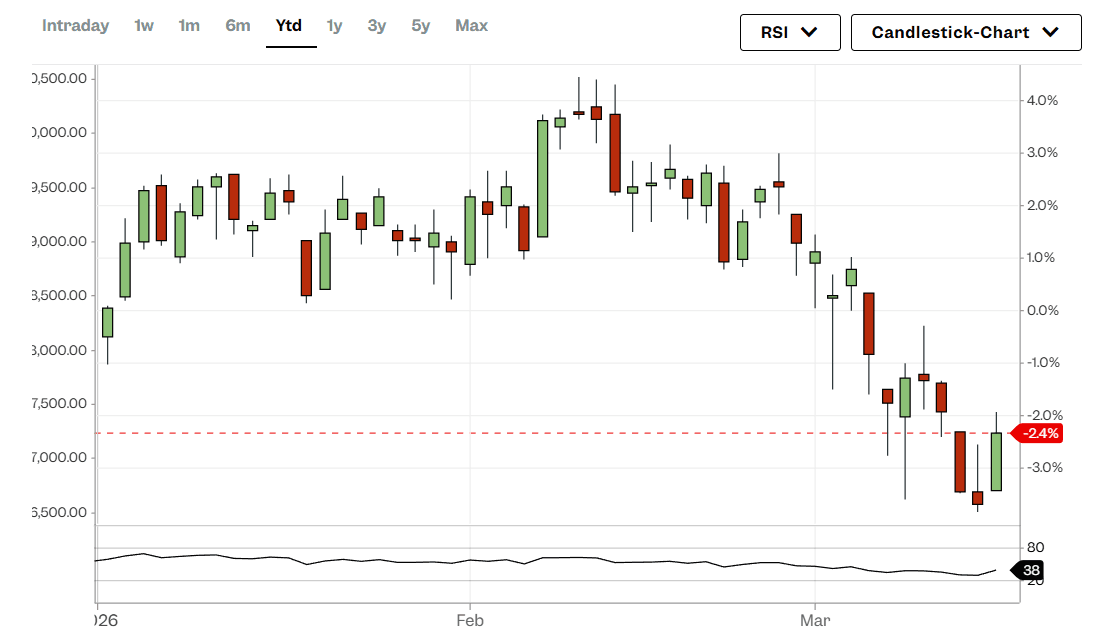
However, temporary shocks are often event-driven. Think of a port strike, a localized geopolitical flare-up that doesn't damage infrastructure, or a seasonal harvest failure. In these cases, the supply curve shifts left momentarily, but the underlying "means of production" remain intact.
For instance, in the recent US strikes against Iran’s critical oil export terminal in the Kharg island, President Trump had made clear that, although military targets on the island were “totally obliterated”, he explicitly stated that he chose to preserve the oil infrastructure for "reasons of decency". Despite that, crude oil’s price jump seems to suggest that the market is on the verge of pricing in a permanent loss of productivity. When this usually happens, the snap-back is usually violent and profitable for those who bought the fear.
While this blog post is not specifically about the US-Iran conflict, we will talk about the universal mechanics of these dislocations. To profit from a supply shock without getting trapped, an investor must be able to distinguish between a "flesh wound" to the supply chain and a "permanent disability."
In the following sections, we will move from this macro theory into the tactical execution of how to scale into these positions and which confirmation signals to watch to ensure you aren't catching a falling knife.
Execution Strategy — Scaling Over Timing
During a typical supply shock, the anticipated scarcity drives up prices for the physical asset, but the equity markets often react with panicked selling as they price in immediate margin compression or operational halts. This creates a dangerous "falling knife" environment where the urge to "call the bottom" is strongest right when it is most dangerous.
The biggest mistake investors make during a supply shock is treating it like a "flash sale" where they must buy everything at once. Supply shocks are notoriously messy; they rarely result in a clean "V-shaped" recovery. Instead, they often involve a period of price discovery, where the market tests how much pain it can actually take. Because the news cycle surrounding the shock is often evolving (e.g., "The Hormuz Strait is closed" followed by "The Strait might be closed for months"), the market tends to bounce and re-test lows multiple times amid heightened volatility.
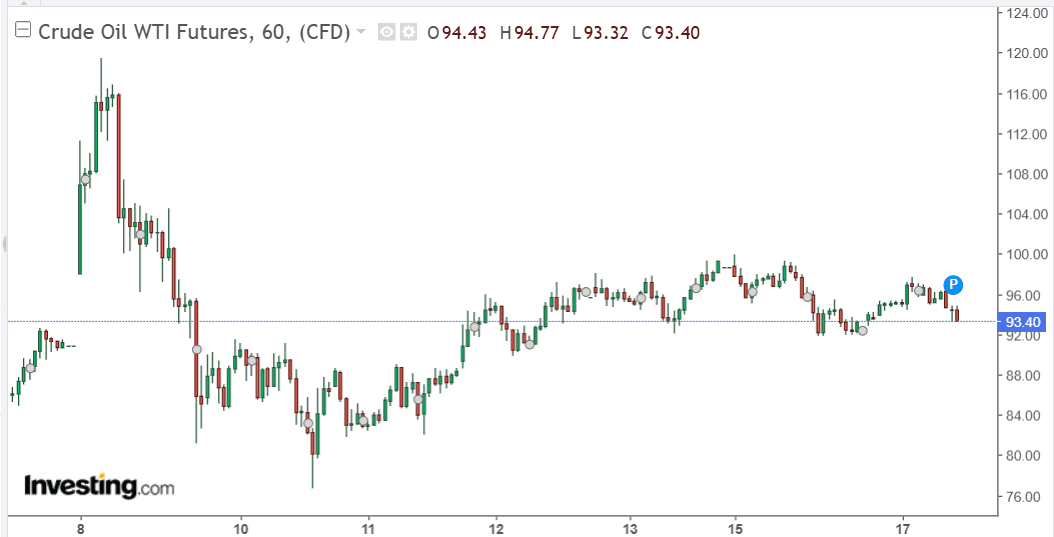
Investors who go "all-in" on the first 10% dip often find themselves tapped out of capital and emotional resolve if the stock drops another 15%.
The Tranche Method: Mathematical Discipline
Instead of trying to be "right" about the exact bottom, aim to be "right" about the average cost. A high-value approach involves breaking your total intended investment into three or four tranches:
The "Anticipation" Tranche (25%): Deployed when the stock hits a major historical support level or a pre-determined valuation metric (like a specific P/E ratio), even if the news is still bad.
The "Stabilization" Tranche (25%): Deployed only after the daily volatility begins to contract—look for "inside days" or a tightening of the trading range.
The "Confirmation" Tranche (50%): Deployed once the price breaks above a short-term moving average or the first "Higher High" is established.
By scaling, you are effectively using a Volatility Buffer. If the price continues to slide after your first entry, your weighted average cost basis improves as you buy lower. If the price takes off immediately, you may own less than a full position, but you have successfully captured the move with significantly lower "Risk of Ruin."
The "Wait and See" Filter: Watching for Confirmation
Buying the first green candle after a vertical drop is a gamble; buying the first higher low is a strategy. To avoid getting trapped, investors should look for three specific confirmation signals that suggest the "selling exhaustion" phase has ended.
The Volume Climax (The "White Flag")
A true bottom in a supply shock often requires a "capitulation" event. Look for a massive spike in trading volume accompanied by a sharp price drop that eventually recovers slightly by the closing bell.
This represents the final "weak hands" throwing in the towel. When everyone who wanted to sell has sold, the path of least resistance shifts upward.
Price Action: The "First Higher Low"
The most dangerous part of a supply shock is the "falling knife" phase. To filter out head-fakes, teach your readers to wait for a specific pattern:
The Initial Bounce: Price stops falling and ticks up. (Do not buy yet).
The Retest: Price pulls back toward the recent low.
The Higher Low: Price turns upward before hitting the previous low.
Keep in mind that a higher low is the first objective evidence that buyers are becoming more aggressive than sellers at a specific price point.
Divergence in Momentum
When the news is at its absolute worst (e.g., "Supply chain will be closed for six months"), but the stock stops making new lows, you have bullish divergence.
If the news gets worse but the price stays flat or moves up, the "bad news" is officially priced in. This is often the safest entry point for a long-term position.
Derivative/Spread Stabilization
In a supply shock, "Backwardation" (near-term prices much higher than future prices) is common. When this extreme gap begins to narrow, it signals that the physical market is starting to normalize, even if the headlines are still chaotic.
The Proactive Alternative: Automating Your Resilience
Understanding how to manually hunt for supply shock bottoms is a vital skill, but it requires constant vigilance and an iron stomach. For the investor who values stability without the 24/7 screen time, there is a more systematic way to navigate uncertainty.
Meet the Surmount Recession Resistant Strategy
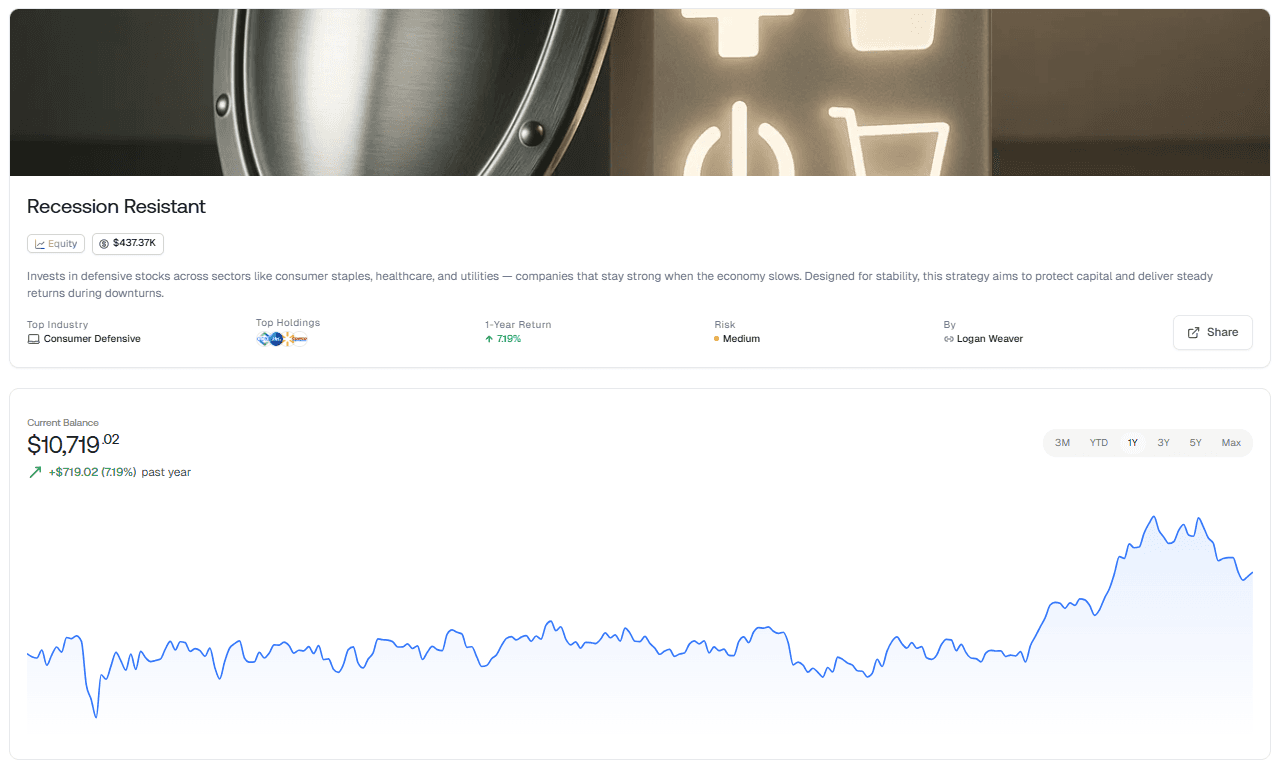
While supply shocks create tactical opportunities, a Recession Resistant core provides the strategic foundation that allows you to weather the storm in the first place. Instead of guessing where the bottom is, this automated strategy focuses on the structural "survivors" of the economy—companies that provide the essential products and services the world cannot pause, regardless of the macro headline.
Why this strategy belongs in your portfolio right now:
Defensive Precision: The strategy algorithmically selects high-conviction leaders in Consumer Staples, Healthcare, Utilities, and Essential Retail. These are the sectors that historically stay upright when discretionary sectors fold.
Built-in Capital Preservation: By focusing on companies with reliable cash flows and strong fundamentals, the strategy is designed to mitigate downside risk and reduce the "drawdown anxiety" that leads to emotional selling.
Systematic Diversification: It removes the single-sector risk of supply shocks by spreading exposure across multiple resilient industries, ensuring your portfolio isn't held hostage by a single broken supply chain.
Automated Execution: You don’t have to wait for "confirmation signals" or "higher lows" manually. The strategy is designed to maintain your defensive posture automatically, providing stability while others are panic-selling.
Stop playing defense on your heels. Deploy the Recession Resistant strategy today to build a portfolio that doesn't just survive economic downturns—it prepares for them.

Automate any portfolio using data-driven strategies made by top creators & professional investors. Turn any investment idea into an automated, testable, and sharable strategy.