Analysis
Betterment Alternative: Why Control-Minded Investors Are Moving to Surmount
If you are looking for a Betterment alternative, you likely fall into one of two camps. You might be a beginner looking for a slightly different flavor of hands-off management, or you are a self-directed investor who has outgrown the "black box" nature of traditional robo-advisors.
Here’s the quick verdict, before delving into the details:
Betterment is the gold standard for passive investors who want to "set it and forget it" without ever looking at a candle chart. Surmount is the premier choice for the self-directed investing alternative, built for those who want professional-grade automation and control over their own strategies without the manual labor of execution.
Comparison at a Glance: Surmount vs. Betterment
Feature | Betterment | Surmount |
Primary Philosophy | Passive, goal-based wealth building | Automated, self-directed strategy execution |
Strategy Type | Pre-set ETF portfolios based on risk | Custom-built, pre-built, or AI-driven strategies |
Pricing Model |
| Fixed monthly subscription:
|
Broker Connectivity | Custodial (they hold your assets) | Non-custodial (connects to your existing broker) |
Ideal For | Hands-off investors | Active investors seeking institutional tools |
Who Betterment Is Actually For
Betterment is designed for the individual who views investing as a chore, and as such it is valuable in terms of doing all the heavy-lifting for them. If your goal is to save for a wedding, a house down payment, or retirement using a diversified basket of low-cost ETFs, Betterment is an excellent tool.
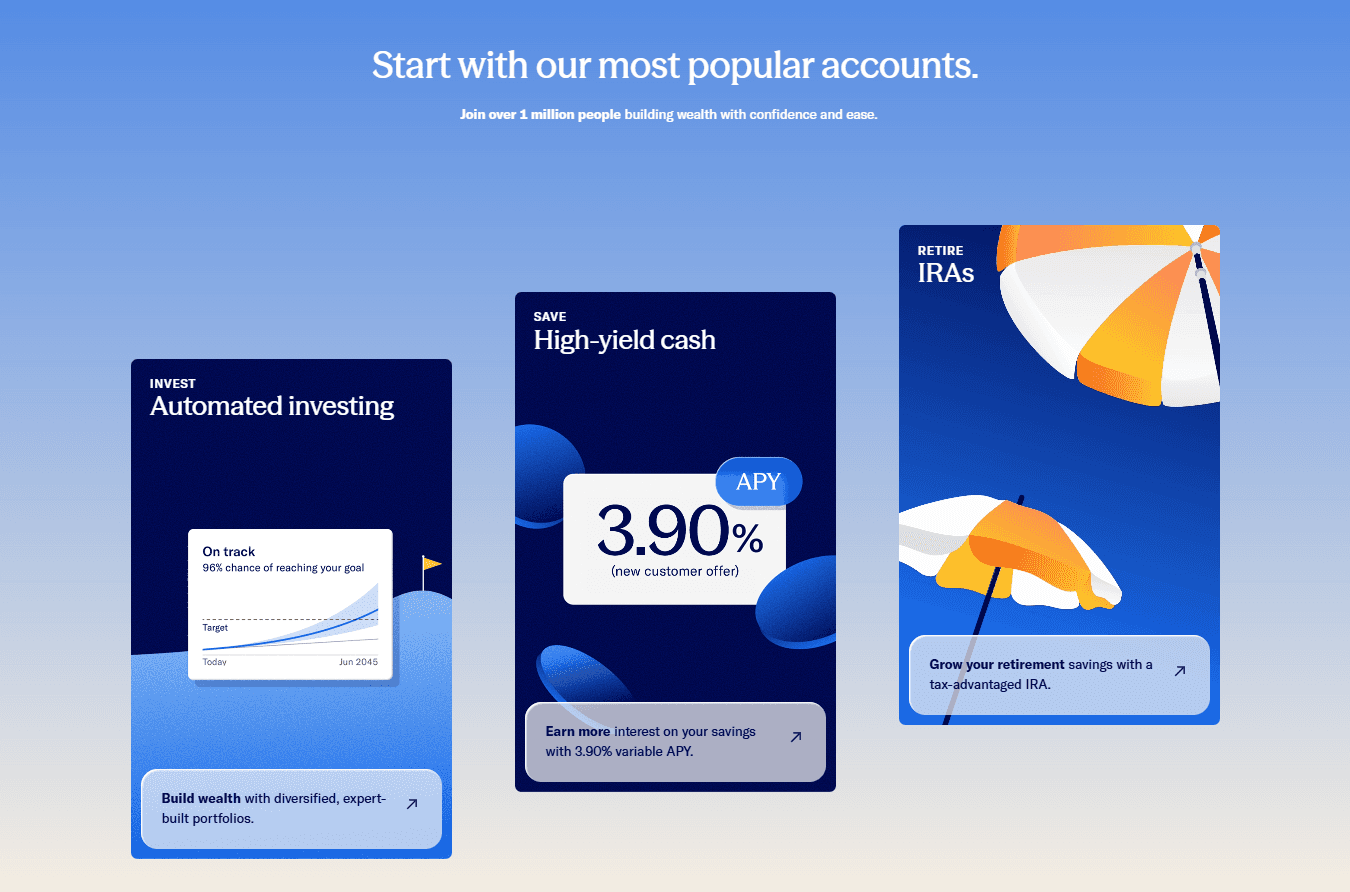
It absolutely excels at behavioral finance. By automating tax-loss harvesting and rebalancing, it prevents you from making emotional mistakes. You don't choose the stocks; you choose the goal, and Betterment’s algorithms fill in the blanks. It is for the investor who wants to spend zero hours a week thinking about market volatility.
Who Surmount Is Actually For
Surmount is the better alternative to betterment for the investor who actually enjoys the market but hates the screen time. If you have a specific thesis—like "I want to buy oversold tech stocks but only when the RSI is below 30"—Surmount allows you to automate that logic quite precisely.
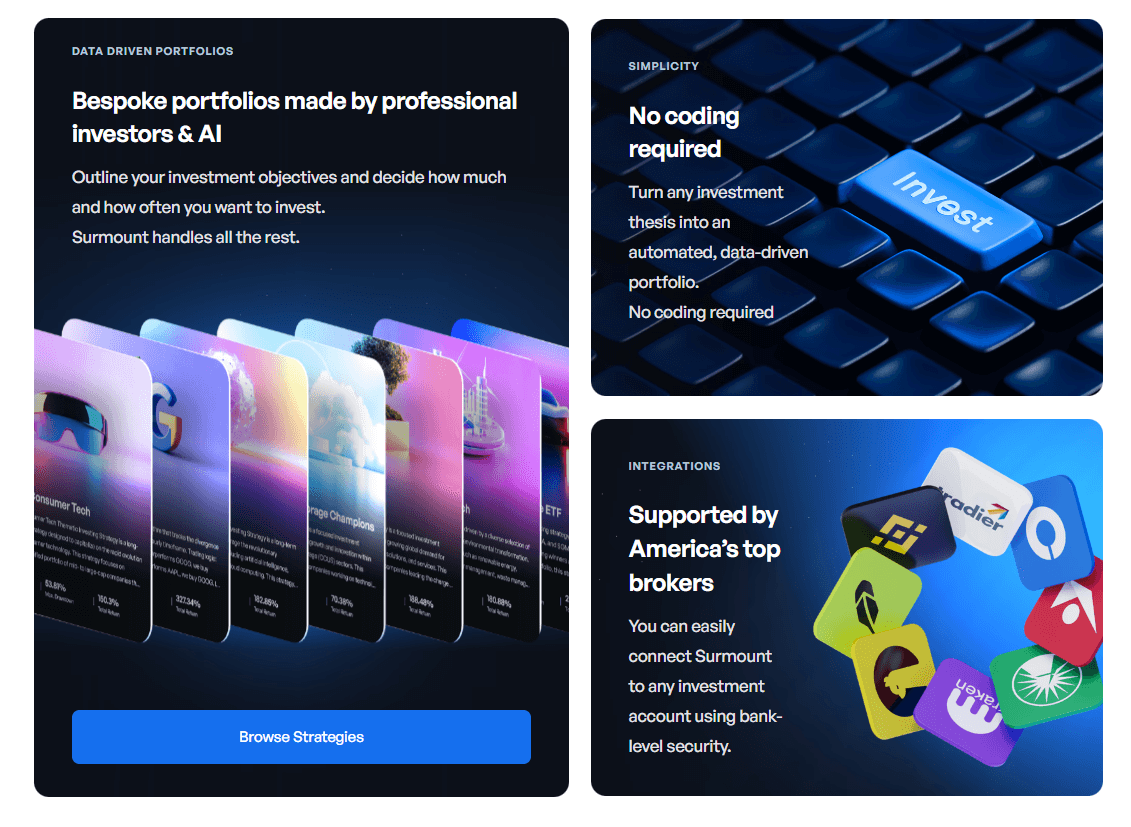
Ultimately, it is for the "prosumer" investor. You want the control of a self-directed brokerage account but the execution of a high-frequency trading desk. Whether you are using Surmount’s AI to build a strategy or picking a proven model from the marketplace, you remain the pilot. Surmount just provides the background technical autopilot system.
Key Differences: Why the Distinction Matters
1. Control vs. Convenience
Betterment offers convenience at the expense of control. You cannot tell Betterment to "stop buying international bonds" if you have a specific macroeconomic view. You are opted into their philosophy.
Surmount turns the tables. As a self-directed investing alternative, it gives you a sandbox. You can connect your logic to live data and let the software handle the trades. You aren't just a passenger; you are the fund manager with all the technical tools automated in accordance to your thesis.
2. Strategy Types and Customization
Betterment portfolios are essentially static templates (Core, Socially Responsible, Innovative Technology). As effective as each of these are, they are extremely broad.
Surmount, on the other hand, allows for highly granular strategies. You can build strategies based on:
Technical indicators (Moving averages, Bollinger Bands)
Fundamental data (P/E ratios, revenue growth)
Sentiment analysis and AI-driven insights
Cross-asset correlations (e.g., trading Equities based on Treasury yield movements)
3. Broker Connectivity
A major pain point with robo-advisors is the need to move your capital. Betterment requires you to deposit money into their proprietary brokerage.
Surmount is a broker-agnostic layer. You don't have to sell your positions and move your cash. You can simply connect Surmount to your existing accounts at:
Alpaca Securities
Interactive Brokers (IBKR)
Webull
Tradestation
Coinbase & Kraken (for crypto exposure)
4. Transparent Flat Pricing
Betterment charges a percentage of your total assets (AUM). While 0.25% sounds small, it scales with your success. A $1,000,000 portfolio costs you $2,500 every single year.
Surmount operates on a flat subscription model. Whether you are managing $10,000 or $10,000,000, your costs remain predictable. This "SaaS-style" pricing is often a more efficient betterment alternative for high-net-worth investors who are tired of "success taxes" on their capital.
FAQ
Is Betterment good for active investors?
Not particularly. Betterment is built for passive indexing. If you want to trade specific sectors, use technical indicators, or have a hands-on approach to market timing, you will find the platform's "guardrails" frustratingly restrictive.
Can Surmount replace Betterment?
It depends on your intent. If you want a robot to tell you how much to save for retirement and pick your funds for you, stay with Betterment. If you want to replace Betterment’s automation with your own custom-tailored investment logic, Surmount is the natural evolution.
Does Surmount offer tax-loss harvesting?
Yes, but with more flexibility. While Betterment applies tax-loss harvesting across their fixed portfolios, Surmount allows you to integrate sophisticated risk management and tax-efficient logic into your own custom strategies.
What brokers does Surmount support?
Surmount currently supports major platforms including Alpaca, Interactive Brokers, Webull, and Tradier, as well as leading crypto exchanges like Coinbase and Kraken.
Looking for more comparisons? Check out our guide on M1 alternatives or see how we stack up in a direct Composer vs Surmount breakdown.
Automate any portfolio using data-driven strategies made by top creators & professional investors. Turn any investment idea into an automated, testable, and sharable strategy.