Should You Invest During a Market Crash? What to Know
Surmount Blogs
Wondering if you should you invest during a market crash? Here's what history and data actually show.

Should You Invest During a Market Crash? What to Know
Red numbers on your portfolio app. Headlines predicting the next Great Depression. Every instinct telling you to hit “sell” before things get worse.
If you're asking whether you should invest during a market crash, you're not alone — and it turns out the answer isn't as scary as it feels in the moment.
Why Market Crashes Trigger the Urge to Sell
Humans are wired to avoid loss more than we're wired to seek gains. When markets drop, that instinct kicks into overdrive, even though volatility itself is a feature of long-term investing, not a flaw to be avoided, and it can push investors toward decisions that feel safe in the short term but hurt them over the long run.
Common reactions include:
Panic selling to “stop the bleeding”
Freezing and avoiding the portfolio altogether
Hoarding cash, waiting for a “better” entry point that rarely arrives on schedule
Second-guessing a long-term plan based on short-term noise
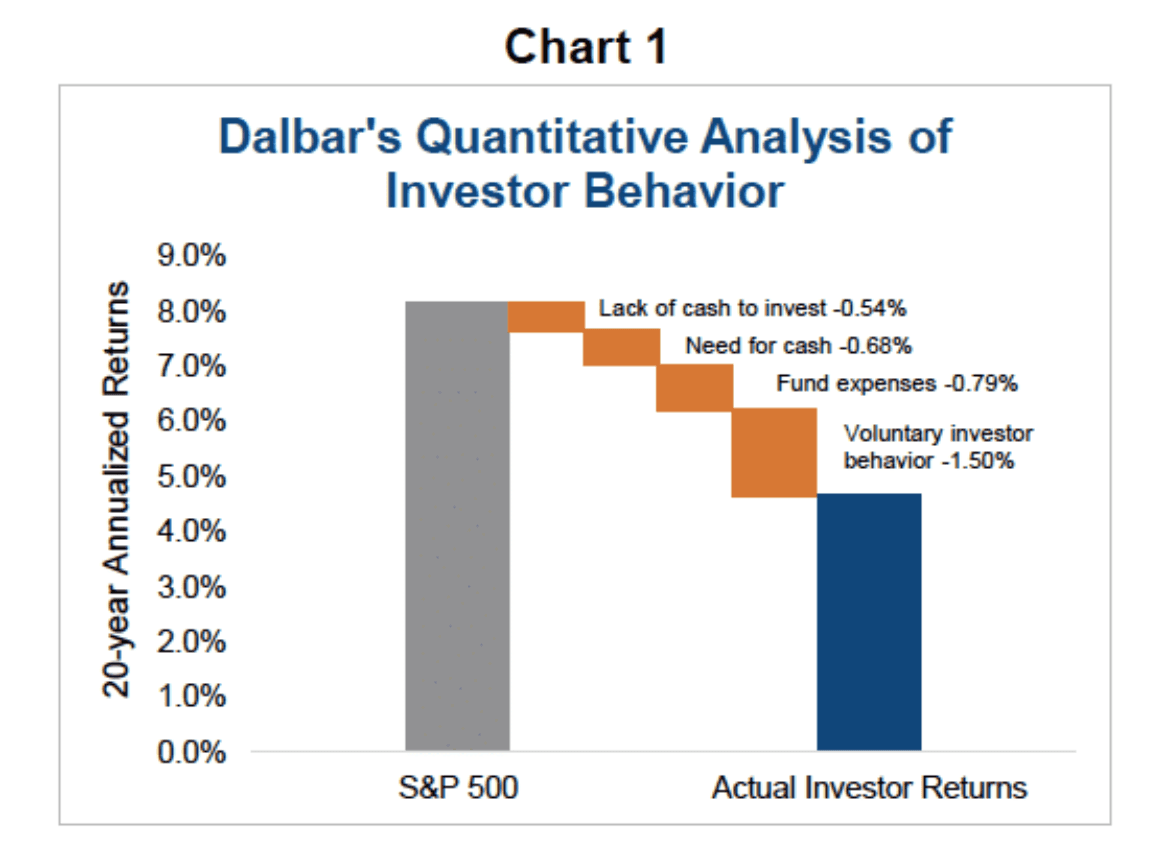
None of these responses are irrational — they're just not usually profitable. Research from DALBAR's Quantitative Analysis of Investor Behavior shows that the gap between market returns and actual investor returns is driven almost entirely by mistimed decisions like these.
Investing During a Recession: What History Shows
If you look back at nearly every major downturn, a pattern emerges. The moments that felt most catastrophic in real time were often followed by some of the strongest recoveries on record. If you're also wondering whether a recession is likely this year, the same discipline applies — react to data, not headlines.
A few examples:
2008 Financial Crisis — widely called the start of a “Great Depression,” yet the S&P 500 returned well over 400% in the following 13 years.
2020 COVID Crash — one of the fastest market drops in history, followed by one of the fastest recoveries.
2022 Inflation Selloff — a rough year for nearly every asset class, followed by two of the strongest years in decades.
This doesn't mean every crash resolves quickly or painlessly — some downturns, like the dot-com bust, took years to fully recover. But it does mean that investing during a recession has historically rewarded patience far more often than it's punished it, based on long-run index data from the Federal Reserve Bank of St. Louis (FRED).
Market Crash Recovery Time: A Look at the Data
Recovery time varies significantly depending on the crash and what you're invested in, according to historical drawdown data from S&P Dow Jones Indices:
Event | Approx. Time to Recover |
2020 COVID Crash | Months |
2008 Financial Crisis (broad market) | ~4–6 years |
Dot-Com Bubble (tech-heavy) | 7+ years |
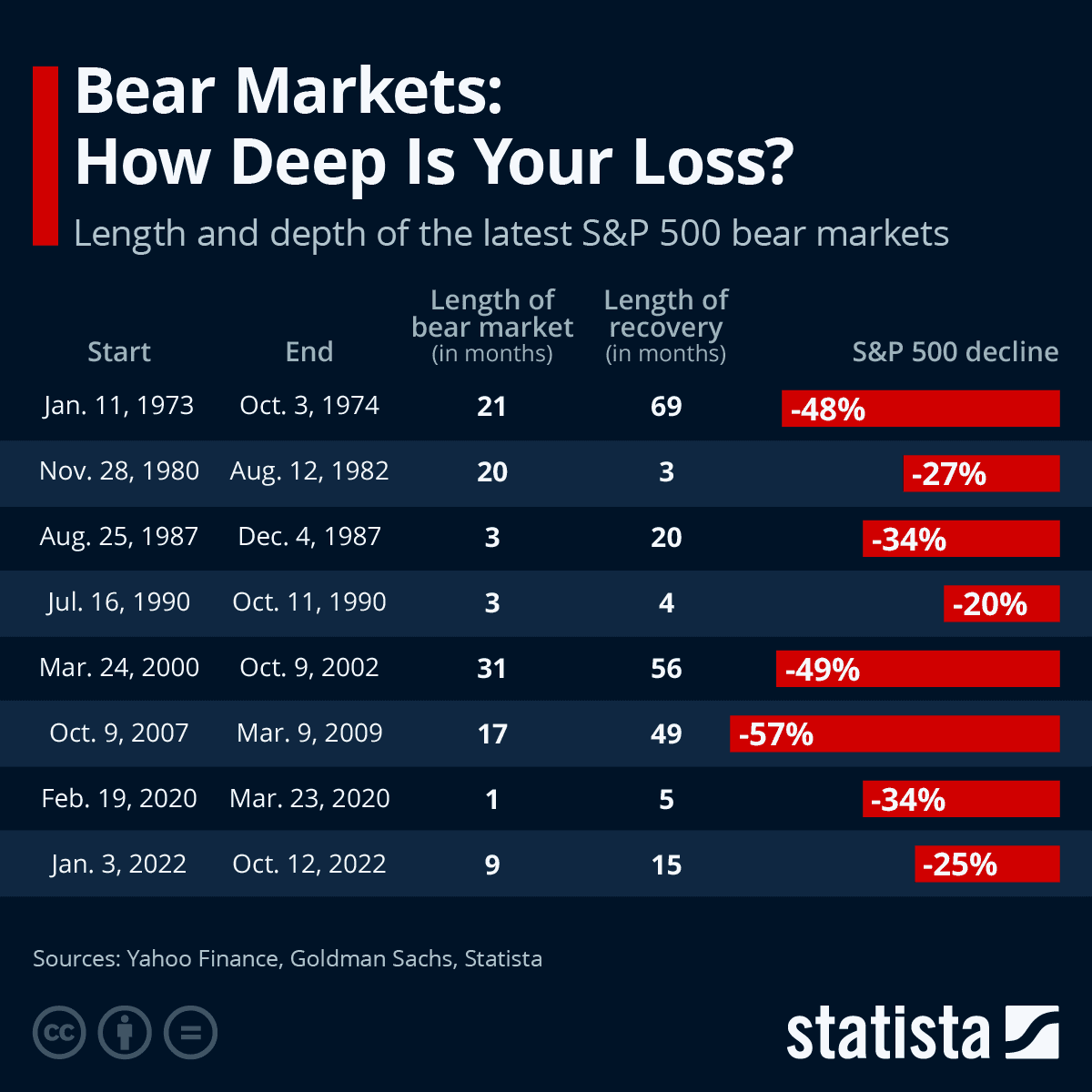
The takeaway isn't “every crash bounces back fast.” It's that timelines vary — which is exactly why a long term investing strategy built on rules, not guesswork, matters more than trying to guess the bottom.
Dollar Cost Averaging During a Crash vs. Lump Sum
One of the most debated questions among investors is whether to deploy cash all at once or spread it out over time.
Lump sum investing has historically outperformed roughly two-thirds of the time, simply because markets rise more often than they fall, according to Vanguard's long-running research on this exact question.
Dollar cost averaging during a crash trades some potential upside for peace of mind — you're less exposed if the market keeps falling in the short term.
Neither approach is “wrong” — though as we've argued before, dollar-cost averaging can function more as an emotional coping mechanism than an optimal strategy, the right one depends on your risk tolerance, timeline, and how much emotional bandwidth you have to watch short-term swings without reacting.
How to Avoid Panic Selling When Markets Drop
A few practical guardrails:
Set a plan before a crash happens — not during one
Automate contributions so decisions aren't made emotionally in real time
Zoom out to your actual time horizon, not the daily headlines
Avoid checking your portfolio more than necessary during volatility
Avoiding panic selling comes down to structure, which is exactly why most investors get the sell decision systematically wrong — they're relying on feel instead of a plan, a pattern well documented in CFA Institute research on loss aversion.
How to Invest When the Market Is Down
Knowing what to do intellectually and actually doing it emotionally are two different things. That gap is where most investors lose money — not from bad strategy, but from bad timing driven by fear. Really, how to invest when the market is down comes down to removing emotion from the decision entirely. If you're holding cash and unsure what to do with it, this breakdown of when to save, invest, or wait is a useful next step.
Is It Safe to Invest Right Now?
There's no universal “safe” — every entry point carries some risk. Part of the is it safe to invest right now question is really self-knowledge, and most investors overestimate their real risk tolerance until a downturn actually tests it. But history suggests that waiting for certainty is its own risk, since the biggest recovery gains often happen early and fast, before sentiment turns positive again.
The Best Way to Invest During Volatility — Without the Guesswork
If the hardest part of investing during a downturn is managing your own emotions, the most effective fix isn't willpower — it's removing yourself from the decision entirely. As 2025 proved, markets can absorb enormous chaos and still reward those with a systematic plan, which is exactly the kind of consistency automation is built for.
Instead of reacting to headlines in real time, a systematic approach follows predetermined logic — buying, holding, or rebalancing based on data, not fear. So should you invest during a market crash? History says yes — but only if you can stick to the plan.
Automate the Discipline: AlphaFactory Protective
Here's the uncomfortable truth this whole post has been circling: knowing that you should invest during a market crash and actually doing it are two different things. Fear doesn't care about historical data. It cares about the number on your screen right now.
That's exactly the problem AlphaFactory Protective was built to solve — and it's the best way to invest during volatility without relying on willpower alone.
Instead of asking you to white-knuckle through volatility with willpower alone, AlphaFactory Protective removes the decision from your hands entirely — reacting to market conditions in real time, before panic ever has a chance to set in.
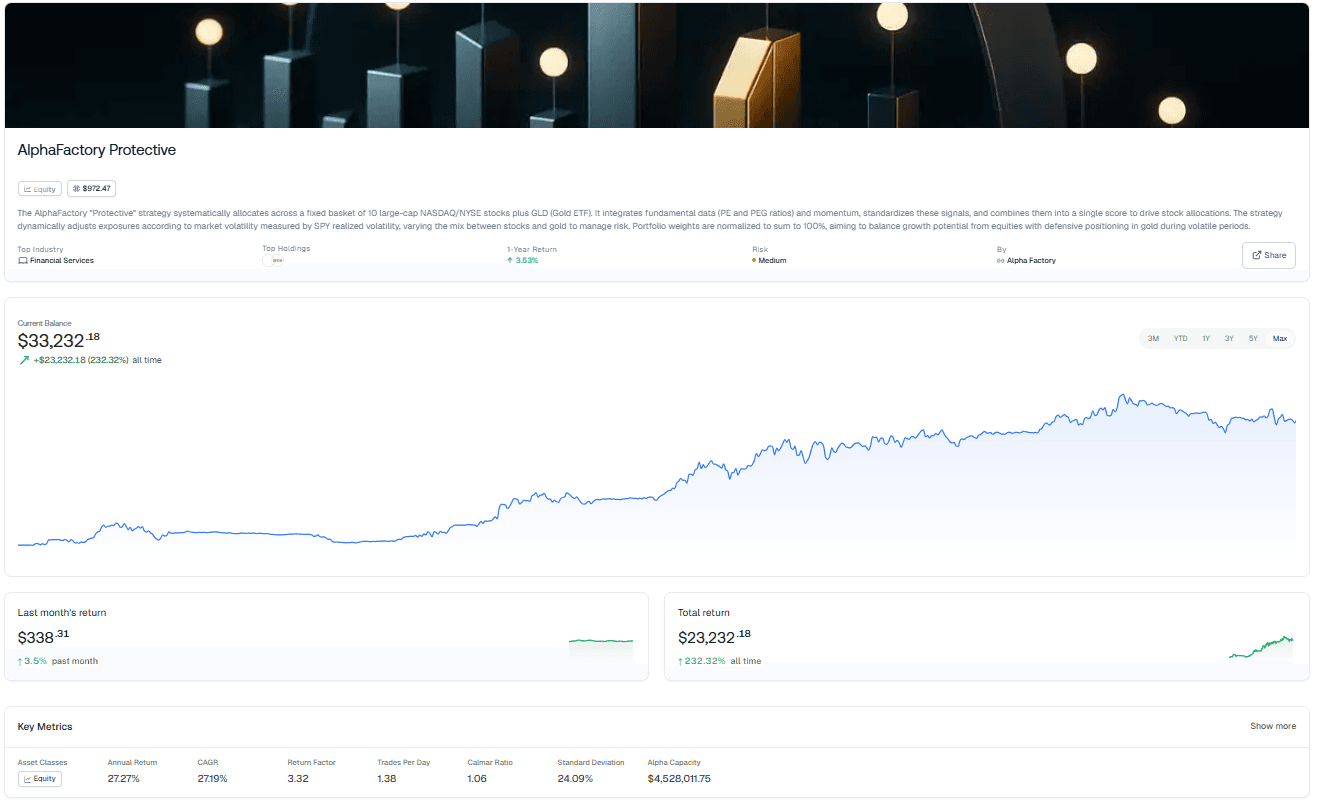
Here's what makes it different:
Reacts to volatility, not headlines. The strategy uses real-time SPY volatility as a trigger — not news cycles, not sentiment, not fear. When conditions turn turbulent, it acts automatically.
Built-in downside protection. As volatility spikes, the strategy shifts allocation toward gold (GLD), giving your portfolio a defensive buffer exactly when panic-selling instincts would normally kick in.
No frozen decision-making. You're never stuck asking “should I sell now?” in the middle of a drawdown — the algorithm already made the call based on data, not emotion.
Rotates back in systematically. Once conditions stabilize, the strategy shifts back toward equities — capturing the recovery instead of missing it while you wait for “certainty” that never comes.
Quality-screened stock exposure. When it is in equities, it favors companies with real momentum and value fundamentals — not just whatever's trending.
Fully automated. No manual rebalancing, no daily monitoring, no emotional override. The system runs the same disciplined process every day, crash or no crash.
Everything this post has argued — that the biggest risk during a downturn isn't the market, it's your own reaction to it — is exactly what AlphaFactory Protective is engineered to remove from the equation.
Ready to stop guessing when to get defensive?
Deploy AlphaFactory Protective to your portfolio and let the data make the call — before the next crash, not during it.
Frequently Asked Questions
Should You Invest During a Market Crash?
For most long-term investors, yes — historically, staying invested through downturns has outperformed selling and waiting for certainty.
How Long Does It Take the Stock Market to Recover From a Crash?
Recovery time varies widely, from a few months (2020) to several years (2008) or even longer (dot-com bubble).
Is Dollar Cost Averaging During a Crash Better Than Lump Sum Investing?
Lump sum has historically outperformed roughly two-thirds of the time, but dollar-cost averaging during a crash can reduce short-term regret and emotional stress.
How Do I Avoid Panic Selling When the Market Drops?
Set your plan before a downturn happens, automate your decisions, and avoid checking your portfolio more than necessary during volatility.
Is It Safe to Invest Right Now During Market Uncertainty?
There's no universal safe entry point, but history shows waiting for certainty often means missing the early, fastest phase of a recovery.

Automate any portfolio using data-driven strategies made by top creators & professional investors. Turn any investment idea into an automated, testable, and sharable strategy.