CapEx and Free Cash Flow: A Smarter Allocation Guide
Surmount Blogs
Understand capex and free cash flow and how smart capital allocation decisions today can signal future growth, risk, and long-term compounding potential.

CapEx and Free Cash Flow: A Smarter Allocation Guide
In the current market dynamics, which are increasingly defined by AI’s massive capital demands, a growing tension between capex and free cash flow is subtly becoming an important theme for investors.
In fact, hyperscalers like Amazon, Microsoft, and Alphabet have been allocating a growing portion of their operating cash flow to capex (approaching ~75%) which echoes the risky extremes seen during the dot-com bubble:
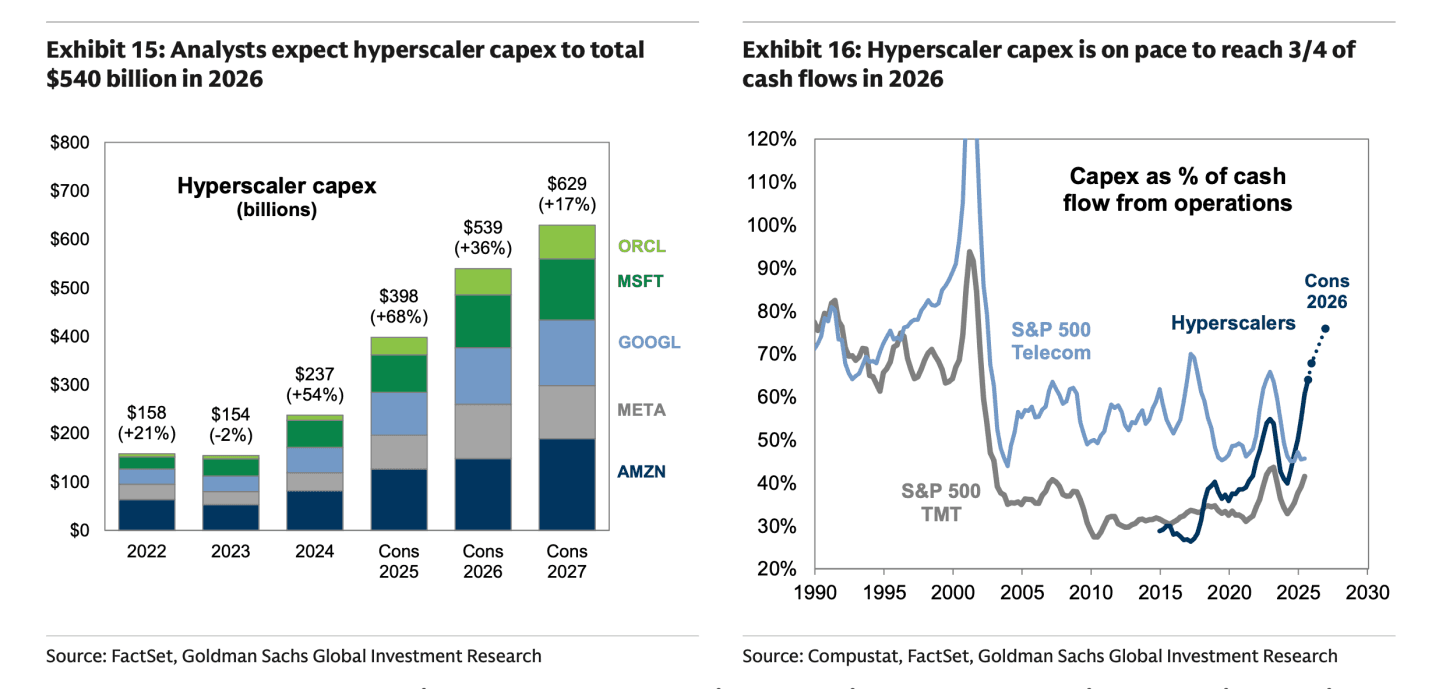
Interestingly enough, big tech continues to pursue such aggressive and unprecedented infrastructure investments despite the heavy FCF pressures seen in the companies’ cash flow statements. The fact that valuations in the market still rise despite these pressures underscores how the market continues to prioritize future growth potential over current cash flow realities.
Understanding the Valuation Implications of CapEx and Free Cash Flow
Although the AI proliferation boom has been in play since late 2022, 2026 seems to stand in stark contrast to previous years, especially in terms of the degree to which companies are willing to see their free cash flow levels burn, at the expense of increased Capex.
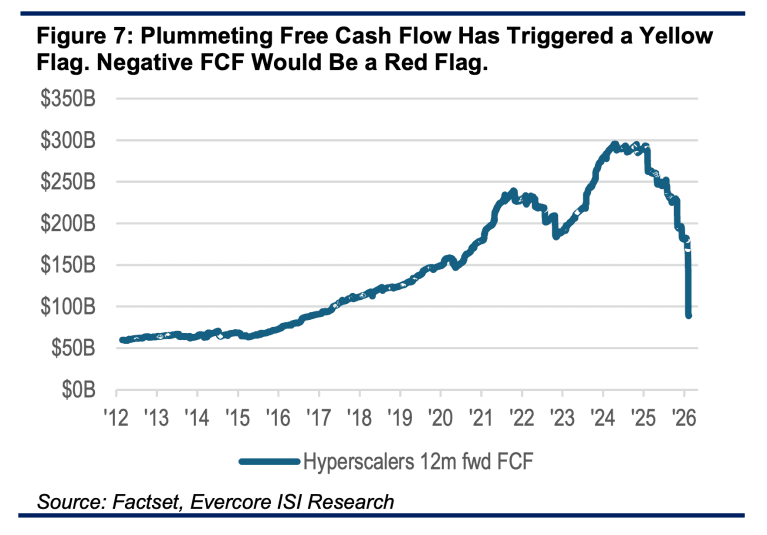
One reason as to why this degree of capital allocation (which would seem reckless to some), is acceptable to companies and even its shareholders is that, in accounting terms, this would simply qualify as an asset transfer from one category to another. This is because capital expenditure, while using up free cash flow, is treated as an addition to the company’s fixed assets. As such, the costs are capitalized, and typically spread out over several years undergoing depreciation.
ROI Uncertainty
Of course, capitalizing one’s costs may look good on the balance sheet, it also carries a certain degree of risk. In theory, these outflows are deemed acceptable by shareholders, as they come with an implicit promise of an enhanced return on investment (ROI). However, once these promises are made, the actual outcome can be far from guaranteed.
High CapEx, particularly in cutting-edge areas, like advanced semiconductors for instance, carry inherent ROI uncertainty. Unlike traditional investments with predictable cash flows, AI projects often have long development cycles, evolving technology standards, and uncertain market adoption.
This uncertainty can directly influence how investors interpret free cash flow metrics:
Low or negative FCF isn’t inherently bad, but it signals that the company is prioritizing growth over immediate cash returns.
Investors may demand a premium on high-FCF firms, seeing them as safer bets with more flexibility to pay dividends, reduce debt, or reinvest opportunistically.
Valuation becomes a balance between potential growth and risk: companies with heavy CapEx but uncertain ROI may face discounted valuations, even if their long-term prospects are compelling.
Ultimately however, valuations will always be impacted by certainty. There may be temporary market exuberance around high-CapEx initiatives, but in the long run, investors will always reward predictability. Companies with unpredictable outcomes will have their cash flow projections given a higher discount rate.
Prioritizing FCF-focused companies and ETFs
One reason as to why investors may accept investment strategies that tilt towards companies with high capex and plummeting free cash flows may be linked to stabilizing interest rates, compared to recent years:
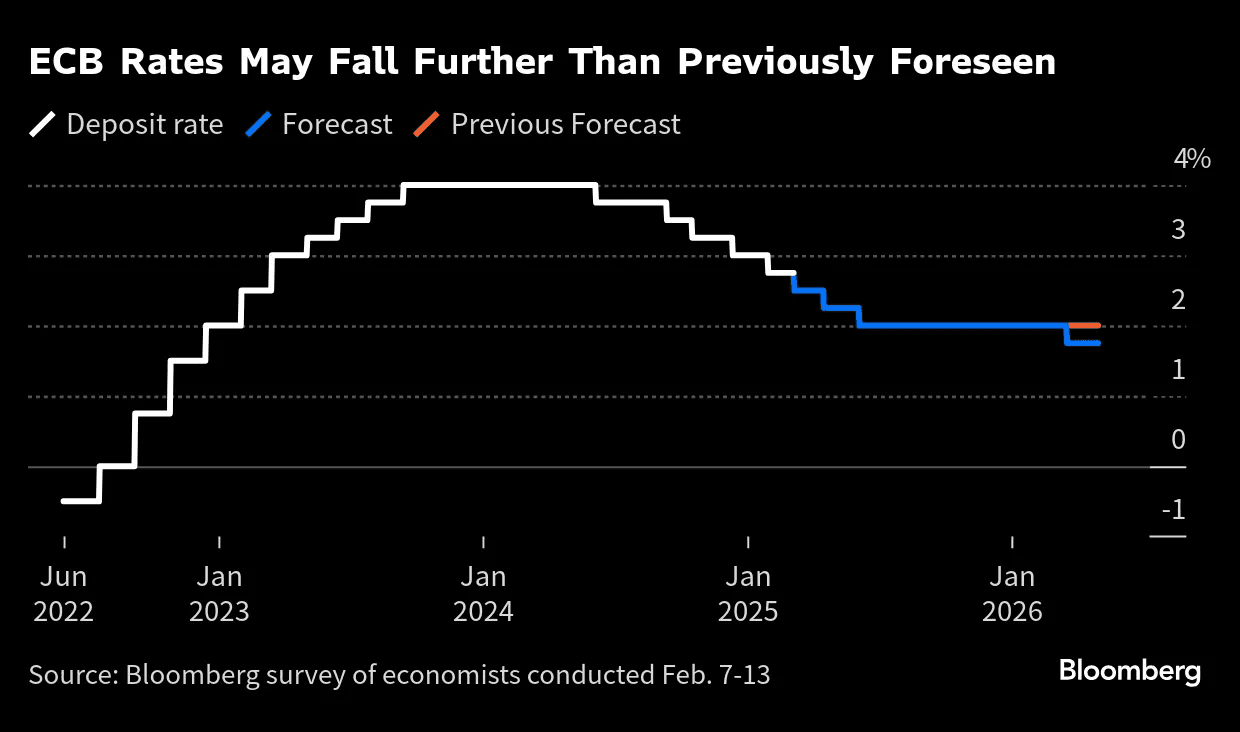
With interest rates tilting lower with more controlled inflation, the cost of capital makes large-scale capital expenditures less expensive for companies. Lower financing costs allow firms to invest aggressively in growth projects—like AI infrastructure—without immediately harming profitability metrics.
However, while lower interest rates put off the immediate cash-flow pressure, they do not eliminate the underlying risk of uncertain returns. In fact, such “favorable” interest rates can actually mask inefficiencies and overinvestment.
For investors, this dynamic underscores why FCF-focused evaluation remains critical—even in a low-rate environment. By assessing how much operating cash is truly available after CapEx, investors can distinguish firms with disciplined spending and high-quality growth from those chasing aggressive expansion without clear returns.
It also reinforces the appeal of ETFs and funds that filter for strong free cash flow trends which combine growth potential with a measure of financial prudence. These vehicles help investors capture exposure to high-performing companies while mitigating the hidden risks of CapEx-heavy strategies.
Advantages of Prioritizing FCF
Investors tend to singularly focus on net income, as an accounting measure, especially in tech companies, which is why heavy capex outflows, which are simply capitalized as assets, are not viewed negatively. However, in real terms free cash flow, which is not an accounting construct, but a real sum, carries core advantages:
Anti-Manipulation: Earnings can be inflated by non-cash items (like revaluing assets or aggressive depreciation). FCF is harder to "fake" because it tracks the actual movement of cash.
Self-Funding Resilience: In a higher-rate environment, companies that generate their own cash don't need to borrow expensive debt or dilute shareholders by issuing new stock.
Capital Optionality: Only high-FCF companies have the luxury of simultaneously funding AI research, paying dividends, and buying back shares.
As such FCF-focused companies and ETFs offer a strategic edge for investors seeking a balance between growth and financial discipline. By concentrating on firms with strong cash-generation capabilities, investors gain exposure to businesses that can weather market volatility, sustain long-term investments, and return value to shareholders without overreliance on external financing.
Practical Allocation Guide for Smarter Investing
Understanding the tension between aggressive capital expenditures and sustainable free cash flow is one thing. Allocating capital intelligently around it is another.
A multi-factor framework like the Surmount’s Signal 47 Multi-Factor ETF translates the CapEx vs. FCF debate into a disciplined portfolio structure.
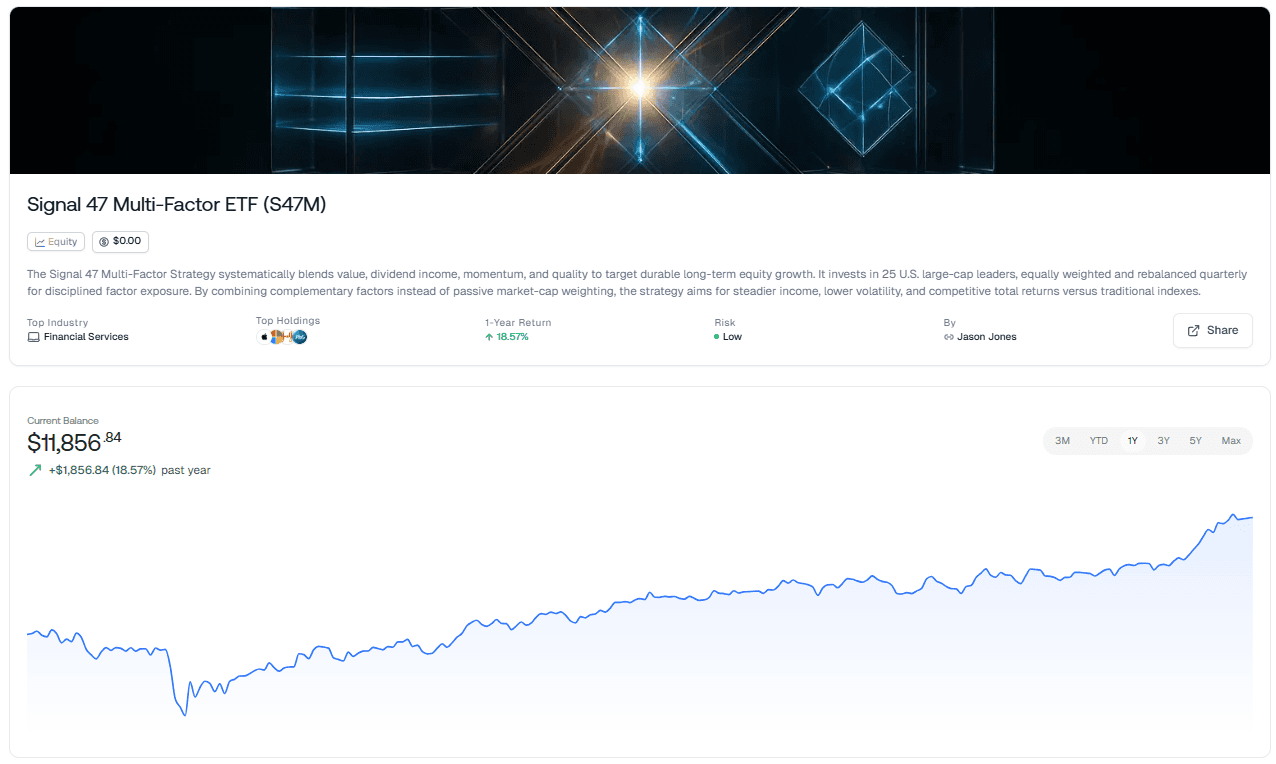
1. It Embeds Free Cash Flow Discipline
The strategy explicitly screens for companies trading at attractive valuations with strong free cash flow. That immediately narrows the universe to firms that:
Generate real, distributable cash
Are less dependent on cheap financing cycles
Can internally fund innovation
In an environment where lower interest rates can encourage aggressive spending, this filter prevents overexposure to companies that are scaling CapEx faster than they are scaling returns.
It prioritizes businesses with capital efficiency, not just ambition.
2. It Avoids the “FCF Trap” Through Factor Balance
Free cash flow by itself can sometimes lead investors into slow-growth cyclicals or structurally challenged industries.
The Signal 47 framework counterbalances that risk by layering:
Momentum → Ensures capital flows toward stocks already demonstrating market strength.
Dividend Strength → Signals that cash generation is consistent enough to reward shareholders.
Quality Metrics → Screens for strong balance sheets and durable business models.
This creates a portfolio where companies must not only generate cash, but also show operational durability and market leadership.
3. It Reduces Mega-Cap CapEx Concentration
Traditional market-cap weighted indexes are increasingly dominated by a handful of mega-cap firms pouring tens of billions into AI infrastructure.
An equally weighted structure spreads exposure across 25 large-cap leaders, preventing:
Excessive concentration in CapEx-heavy hyperscalers
Overreliance on uncertain AI return timelines
Structural vulnerability to a single investment cycle
This design allows participation in innovation without making the portfolio hostage to it.
4. It Builds Capital Optionality at the Portfolio Level
Companies with strong free cash flow have strategic flexibility. They can:
Invest in growth
Pay dividends
Buy back shares
Reduce debt
When a portfolio systematically selects for these traits, it effectively builds optionality into its structure. That resilience becomes especially valuable if:
Credit conditions tighten
Growth slows
AI ROI timelines extend
Market leadership rotates
Instead of betting solely on future promises, the strategy demands present financial strength.
5. It Aligns With a Smarter Allocation Framework
The broader thesis of this blog is simple:
CapEx is not inherently bad. But CapEx without disciplined cash generation introduces valuation risk.
A multi-factor strategy like Signal 47 operationalizes that insight by combining:
Value (don’t overpay)
Free Cash Flow (demand real cash)
Dividend strength (reward discipline)
Momentum (respect market leadership)
Quality (prioritize durability)
The result is not a rejection of growth. It is a framework that demands growth be funded responsibly.
Overall, in a market where falling rates can blur the line between productive investment and overinvestment, this type of disciplined allocation may offer a more balanced path between innovation and financial prudence.

Automate any portfolio using data-driven strategies made by top creators & professional investors. Turn any investment idea into an automated, testable, and sharable strategy.